Can you identify a mysterious ingredient?
Material Properties
Scroll for prep

Please wait…
This video is having trouble loading. You may have lost your Internet connection.
Step 1: Click to Reload this page
Step 2: Click to
Try our other video player
Step 3: Contact your teacher if trouble persists.
Or,
dismiss this message.
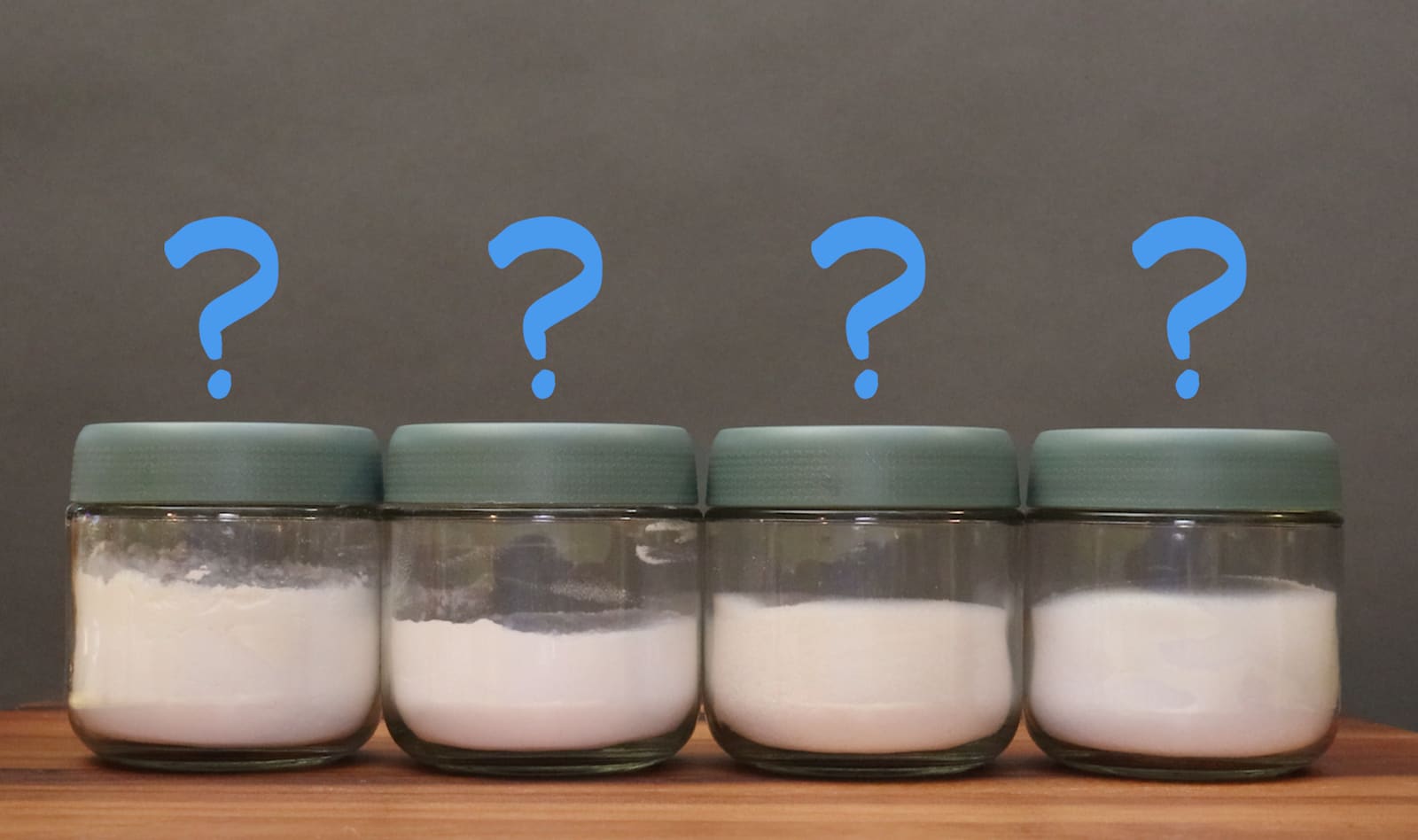
DISCUSS:
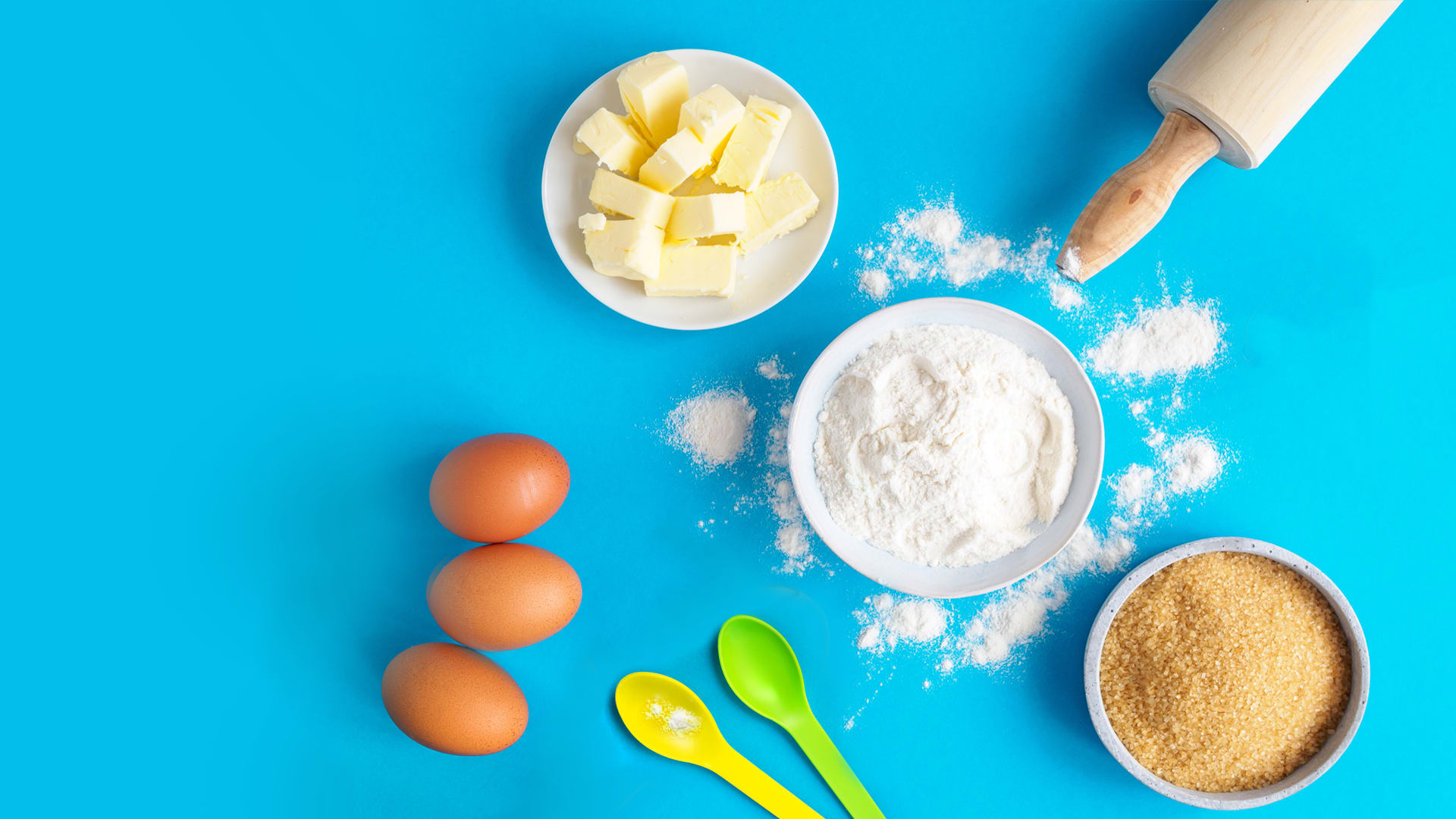
What could happen to your cake if you guessed the ingredients wrong?
What could happen to your cake if you guessed the ingredients wrong?
Please wait…
This video is having trouble loading. You may have lost your Internet connection.
Step 1: Click to Reload this page
Step 2: Click to
Try our other video player
Step 3: Contact your teacher if trouble persists.
Or,
dismiss this message.
Please wait…
This video is having trouble loading. You may have lost your Internet connection.
Step 1: Click to Reload this page
Step 2: Click to
Try our other video player
Step 3: Contact your teacher if trouble persists.
Or,
dismiss this message.
DISCUSS:
Watch what happens when we mix each of these ingredients into a glass of water.
What do you notice?
Watch what happens when we mix each of these ingredients into a glass of water.
What do you notice?
Please wait…
This video is having trouble loading. You may have lost your Internet connection.
Step 1: Click to Reload this page
Step 2: Click to
Try our other video player
Step 3: Contact your teacher if trouble persists.
Or,
dismiss this message.
DISCUSS: What tests could you do to figure out the properties of an ingredient before you start baking with it?
Please wait…
This video is having trouble loading. You may have lost your Internet connection.
Step 1: Click to Reload this page
Step 2: Click to
Try our other video player
Step 3: Contact your teacher if trouble persists.
Or,
dismiss this message.
Please wait…
This video is having trouble loading. You may have lost your Internet connection.
Step 1: Click to Reload this page
Step 2: Click to
Try our other video player
Step 3: Contact your teacher if trouble persists.
Or,
dismiss this message.
Step
01/18
01/18
You’ll work with a partner.
Please wait…
This video is having trouble loading. You may have lost your Internet connection.
Step 1: Click to Reload this page
Step 2: Click to
Try our other video player
Step 3: Contact your teacher if trouble persists.
Or,
dismiss this message.
Step
02/18
02/18
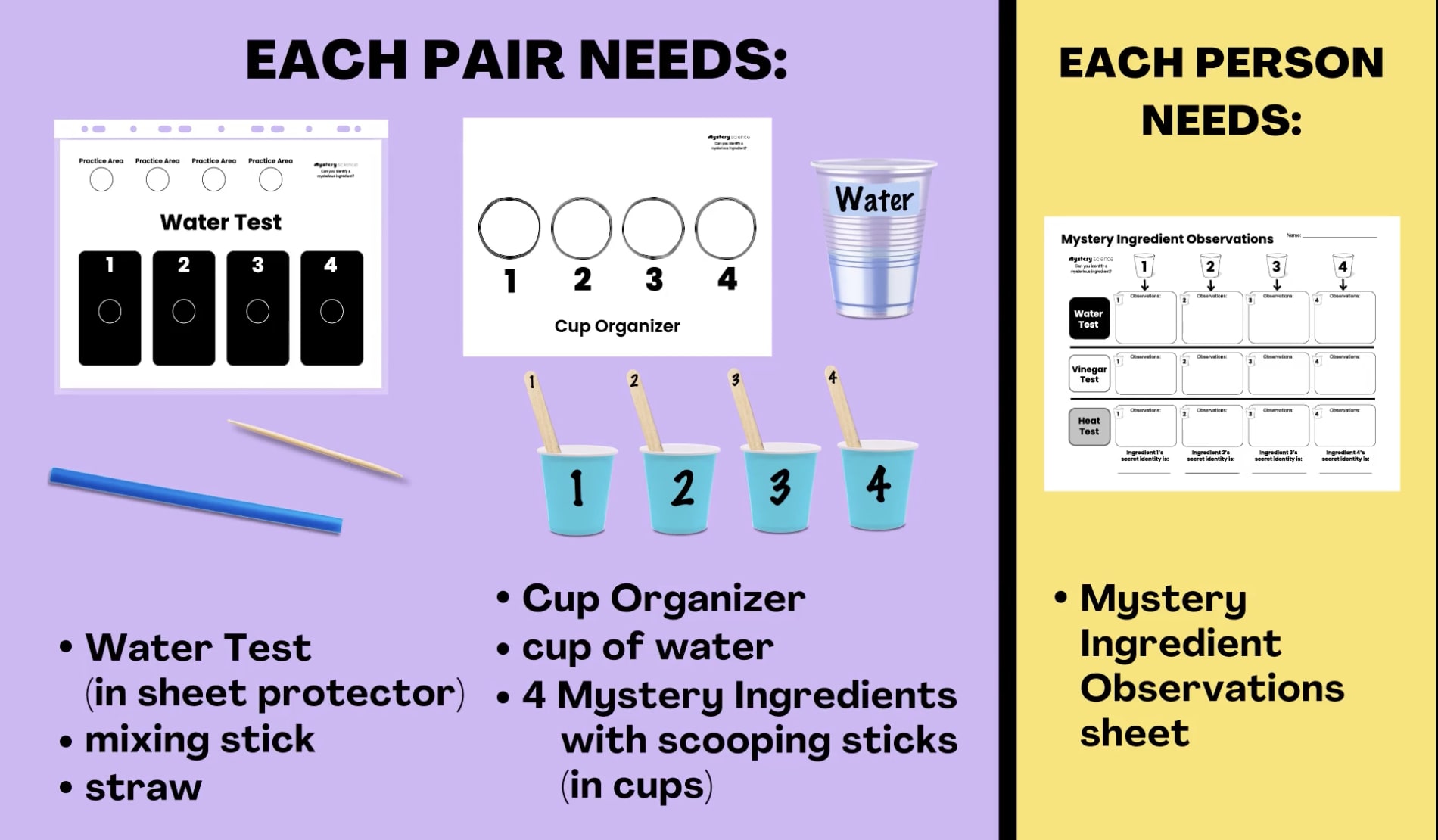
Get your supplies.
Please wait…
This video is having trouble loading. You may have lost your Internet connection.
Step 1: Click to Reload this page
Step 2: Click to
Try our other video player
Step 3: Contact your teacher if trouble persists.
Or,
dismiss this message.
Step
03/18
03/18
Set up your testing area. Both partners should be able to easily reach
the Water Test sheet and Mystery Ingredients.
the Water Test sheet and Mystery Ingredients.
Please wait…
This video is having trouble loading. You may have lost your Internet connection.
Step 1: Click to Reload this page
Step 2: Click to
Try our other video player
Step 3: Contact your teacher if trouble persists.
Or,
dismiss this message.
Step
04/18
04/18
Scoop Ingredient 1 onto the circle inside Box 1 on your Water Test
sheet. Fill in the circle. When you’re done, put your ingredient cup
and stick back in their place.
sheet. Fill in the circle. When you’re done, put your ingredient cup
and stick back in their place.
Please wait…
This video is having trouble loading. You may have lost your Internet connection.
Step 1: Click to Reload this page
Step 2: Click to
Try our other video player
Step 3: Contact your teacher if trouble persists.
Or,
dismiss this message.
Step
05/18
05/18
Scoop the rest of the Mystery Ingredients into their matching
circles. Put everything back in its place when you’re done.
circles. Put everything back in its place when you’re done.
Please wait…
This video is having trouble loading. You may have lost your Internet connection.
Step 1: Click to Reload this page
Step 2: Click to
Try our other video player
Step 3: Contact your teacher if trouble persists.
Or,
dismiss this message.
Step
06/18
06/18
Discuss.
Please wait…
This video is having trouble loading. You may have lost your Internet connection.
Step 1: Click to Reload this page
Step 2: Click to
Try our other video player
Step 3: Contact your teacher if trouble persists.
Or,
dismiss this message.
Step
07/18
07/18
Practice: Lower the straw into the cup. Put your finger tightly over
the top of the straw. Move the straw to a Practice Area. Lift up your
finger to release the water. Only add enough water to fill each circle.
the top of the straw. Move the straw to a Practice Area. Lift up your
finger to release the water. Only add enough water to fill each circle.
Please wait…
This video is having trouble loading. You may have lost your Internet connection.
Step 1: Click to Reload this page
Step 2: Click to
Try our other video player
Step 3: Contact your teacher if trouble persists.
Or,
dismiss this message.
Step
08/18
08/18
Water Test. Partner 1: Add water to Ingredient 1. Fill up the circle.
Partner 2: Use a mixing stick to mix for 30 seconds.
Keep everything inside the black test box. Observe & discuss.
Partner 2: Use a mixing stick to mix for 30 seconds.
Keep everything inside the black test box. Observe & discuss.
Please wait…
This video is having trouble loading. You may have lost your Internet connection.
Step 1: Click to Reload this page
Step 2: Click to
Try our other video player
Step 3: Contact your teacher if trouble persists.
Or,
dismiss this message.
Step
09/18
09/18
Water Test. Repeat adding water and mixing for 30 seconds for
each of the remaining three Mystery Ingredients. Trade off who adds
water and who mixes each time. Discuss your observations.
each of the remaining three Mystery Ingredients. Trade off who adds
water and who mixes each time. Discuss your observations.
Please wait…
This video is having trouble loading. You may have lost your Internet connection.
Step 1: Click to Reload this page
Step 2: Click to
Try our other video player
Step 3: Contact your teacher if trouble persists.
Or,
dismiss this message.
Step
10/18
10/18
Write down what you observed for each ingredient on your Mystery
Ingredient Observations sheet.
Ingredient Observations sheet.
Please wait…
This video is having trouble loading. You may have lost your Internet connection.
Step 1: Click to Reload this page
Step 2: Click to
Try our other video player
Step 3: Contact your teacher if trouble persists.
Or,
dismiss this message.
Step
11/18
11/18
Get the rest of your supplies.
Put a paper towel on top of your Water Test.
Keep your straws & organize your testing area.
Put a paper towel on top of your Water Test.
Keep your straws & organize your testing area.
Please wait…
This video is having trouble loading. You may have lost your Internet connection.
Step 1: Click to Reload this page
Step 2: Click to
Try our other video player
Step 3: Contact your teacher if trouble persists.
Or,
dismiss this message.
Step
12/18
12/18
Scoop each Mystery Ingredient into the matching circle on the
Vinegar Test sheet. Add enough to just fill the circle without going
outside of the lines.
Vinegar Test sheet. Add enough to just fill the circle without going
outside of the lines.
Please wait…
This video is having trouble loading. You may have lost your Internet connection.
Step 1: Click to Reload this page
Step 2: Click to
Try our other video player
Step 3: Contact your teacher if trouble persists.
Or,
dismiss this message.
Step
13/18
13/18
Vinegar Test. Use your straw to add vinegar to Mystery Ingredient 1.
Observe what happens. Repeat adding vinegar and making
observations for each of the remaining three Mystery Ingredients.
Observe what happens. Repeat adding vinegar and making
observations for each of the remaining three Mystery Ingredients.
Please wait…
This video is having trouble loading. You may have lost your Internet connection.
Step 1: Click to Reload this page
Step 2: Click to
Try our other video player
Step 3: Contact your teacher if trouble persists.
Or,
dismiss this message.
Step
14/18
14/18
Record your observations. Write down what you observed for each
ingredient on your Mystery Ingredient Observations sheet.
Then, put a paper towel on top of your Vinegar Test.
ingredient on your Mystery Ingredient Observations sheet.
Then, put a paper towel on top of your Vinegar Test.
Please wait…
This video is having trouble loading. You may have lost your Internet connection.
Step 1: Click to Reload this page
Step 2: Click to
Try our other video player
Step 3: Contact your teacher if trouble persists.
Or,
dismiss this message.
Step
15/18
15/18
Heat Test. Watch what happens to each of the Mystery Ingredients
as they are heated up. Record what you notice on your Mystery
Ingredient Observations sheet.
as they are heated up. Record what you notice on your Mystery
Ingredient Observations sheet.
Please wait…
This video is having trouble loading. You may have lost your Internet connection.
Step 1: Click to Reload this page
Step 2: Click to
Try our other video player
Step 3: Contact your teacher if trouble persists.
Or,
dismiss this message.
Step
16/18
16/18
Based on your observations, which Mystery Ingredient is baking
soda? Discuss with your partner. Then, write your answer at the
bottom of your Mystery Ingredient Observations sheet.
soda? Discuss with your partner. Then, write your answer at the
bottom of your Mystery Ingredient Observations sheet.
Please wait…
This video is having trouble loading. You may have lost your Internet connection.
Step 1: Click to Reload this page
Step 2: Click to
Try our other video player
Step 3: Contact your teacher if trouble persists.
Or,
dismiss this message.
Step
17/18
17/18
Based on your observations, which Mystery Ingredient is corn
starch? Discuss with your partner. Then, write your answer at the
bottom of your Mystery Ingredient Observations sheet.
starch? Discuss with your partner. Then, write your answer at the
bottom of your Mystery Ingredient Observations sheet.
Please wait…
This video is having trouble loading. You may have lost your Internet connection.
Step 1: Click to Reload this page
Step 2: Click to
Try our other video player
Step 3: Contact your teacher if trouble persists.
Or,
dismiss this message.
Step
18/18
18/18
Based on your observations, which Mystery Ingredient is salt?
Which is sugar? Discuss with your partner. Then, write your answers
on your Mystery Ingredient Observations sheet.
Which is sugar? Discuss with your partner. Then, write your answers
on your Mystery Ingredient Observations sheet.
Time to Clean Up!
Teachers: We suggest pausing here to clean up from the activity.
We estimate that the next section will take 10 minutes.
If you’re continuing right now, advance to the next slide.
Please wait…
This video is having trouble loading. You may have lost your Internet connection.
Step 1: Click to Reload this page
Step 2: Click to
Try our other video player
Step 3: Contact your teacher if trouble persists.
Or,
dismiss this message.
DISCUSS: In what other situations could identifying an unknown substance be useful?
Please wait…
This video is having trouble loading. You may have lost your Internet connection.
Step 1: Click to Reload this page
Step 2: Click to
Try our other video player
Step 3: Contact your teacher if trouble persists.
Or,
dismiss this message.

organism
1 of 14
any living thing

environment
2 of 14
a living thing’s surroundings, including other living things and non-living parts like soil, water, and air
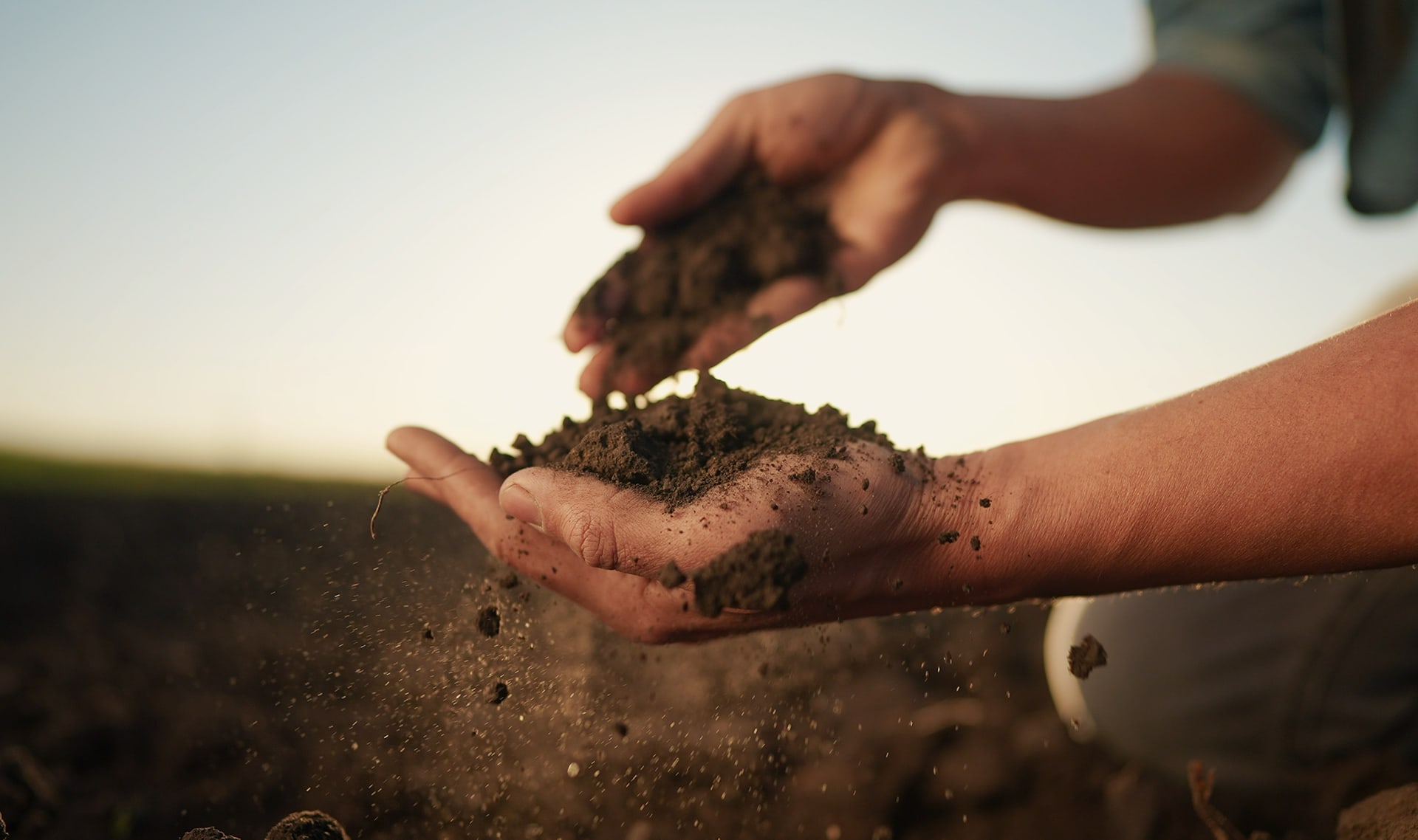
soil
3 of 14
found on Earth's surface; made of tiny rocks and material from dead plants and animals
Please wait…
This video is having trouble loading. You may have lost your Internet connection.
Step 1: Click to Reload this page
Step 2: Click to
Try our other video player
Step 3: Contact your teacher if trouble persists.
Or,
dismiss this message.
matter
4 of 14
anything that takes up space and has weight; can be in different forms such as solid, liquid, or gas
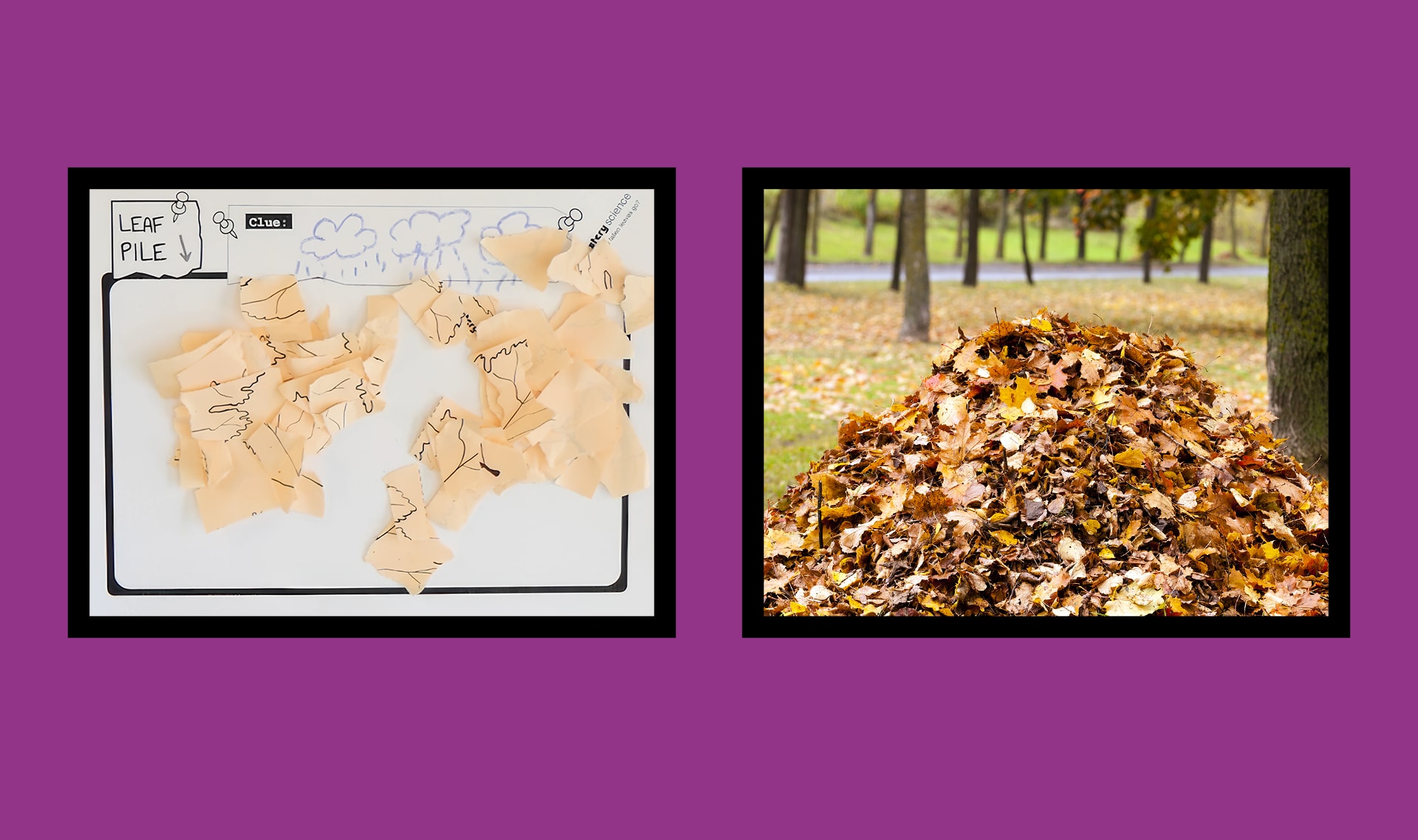
model
5 of 14
a pretend version of something that scientists use when the real thing is too big, small, or complicated to work with
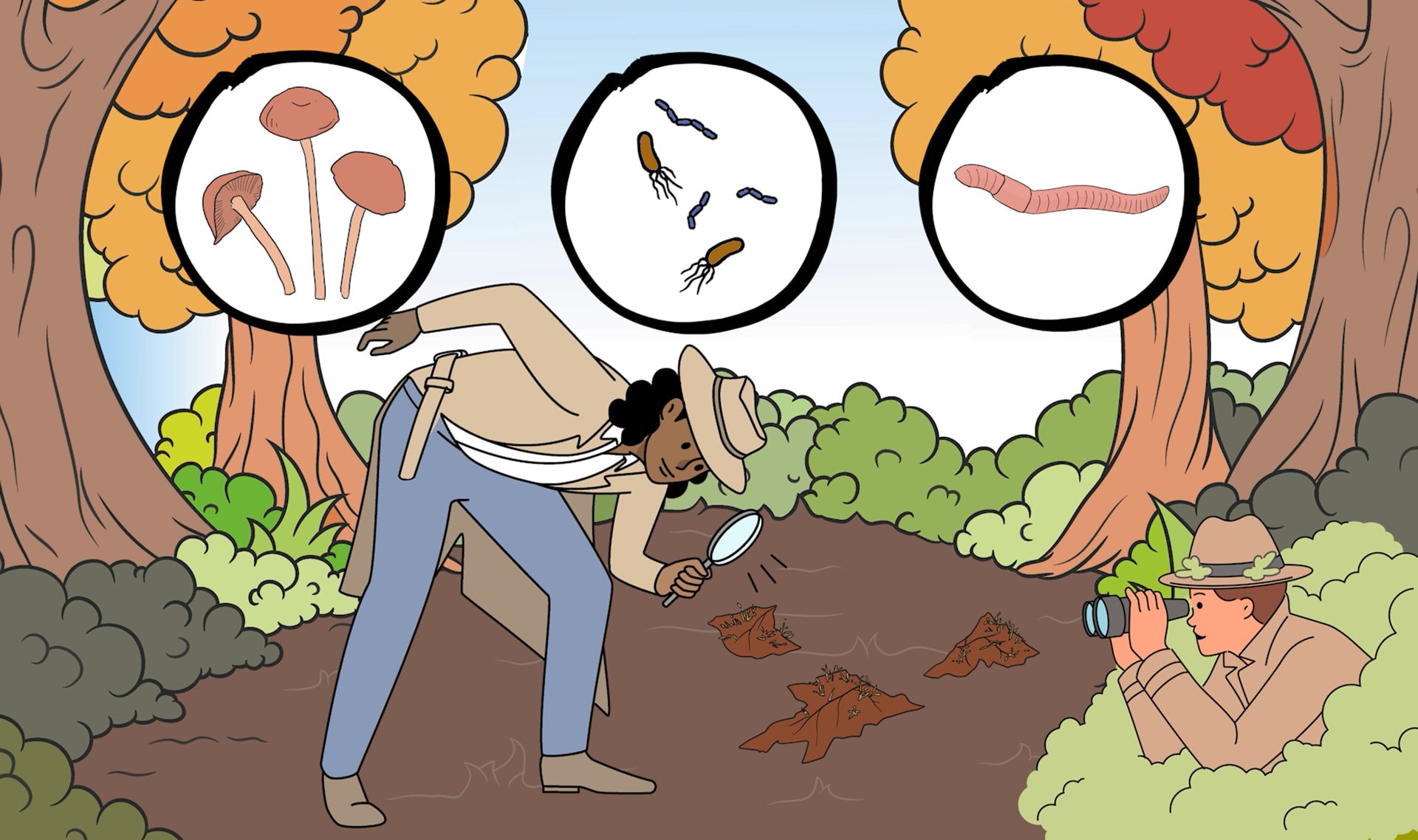
evidence
6 of 14
information that can be used to support or reject an idea

microscope
7 of 14
a tool used to see very tiny things up close
Please wait…
This video is having trouble loading. You may have lost your Internet connection.
Step 1: Click to Reload this page
Step 2: Click to
Try our other video player
Step 3: Contact your teacher if trouble persists.
Or,
dismiss this message.
decompose
8 of 14
the process of breaking down dead plants, dead animals, or animal waste
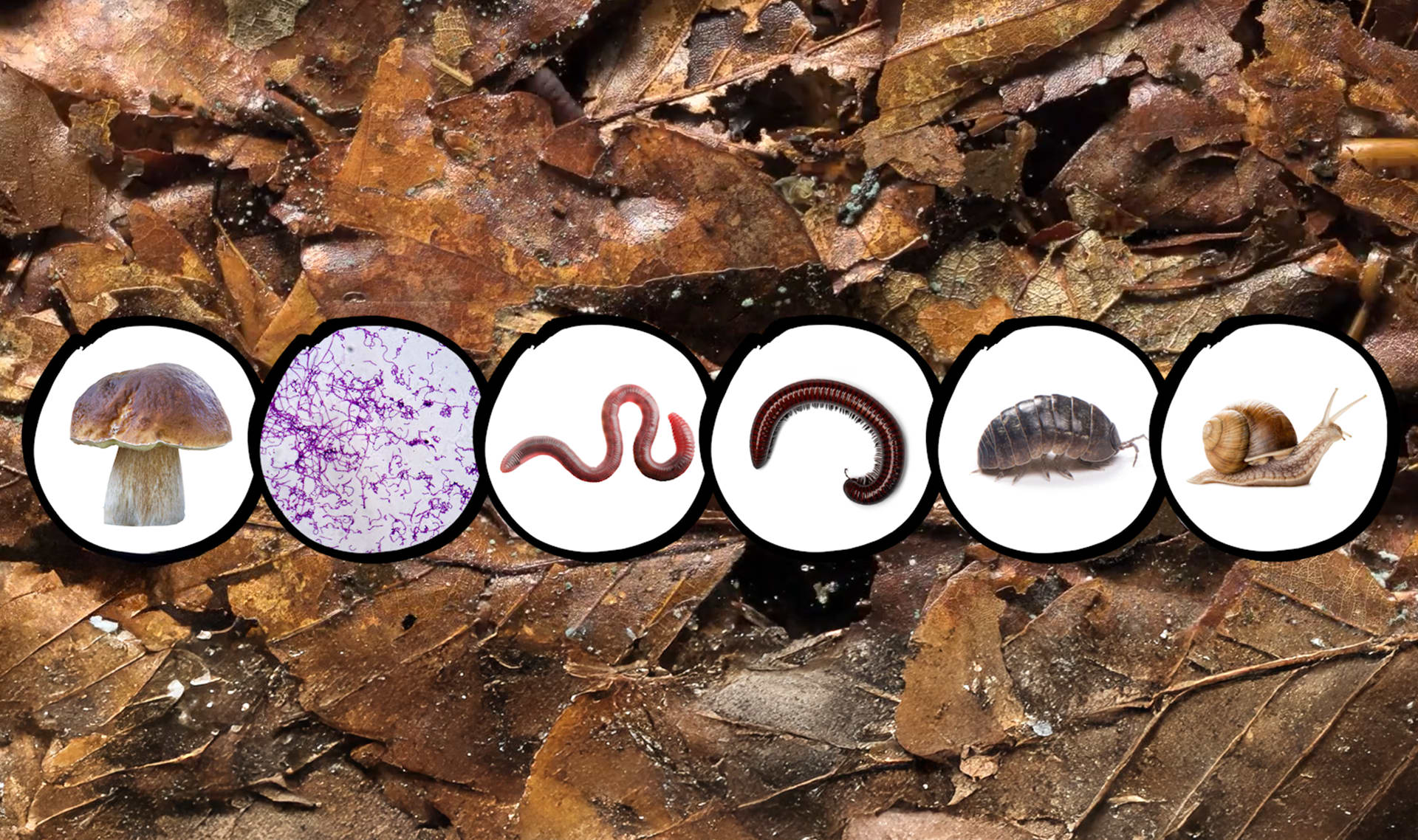
decomposer
9 of 14
a living thing that can break down dead plants, dead animals, or animal waste
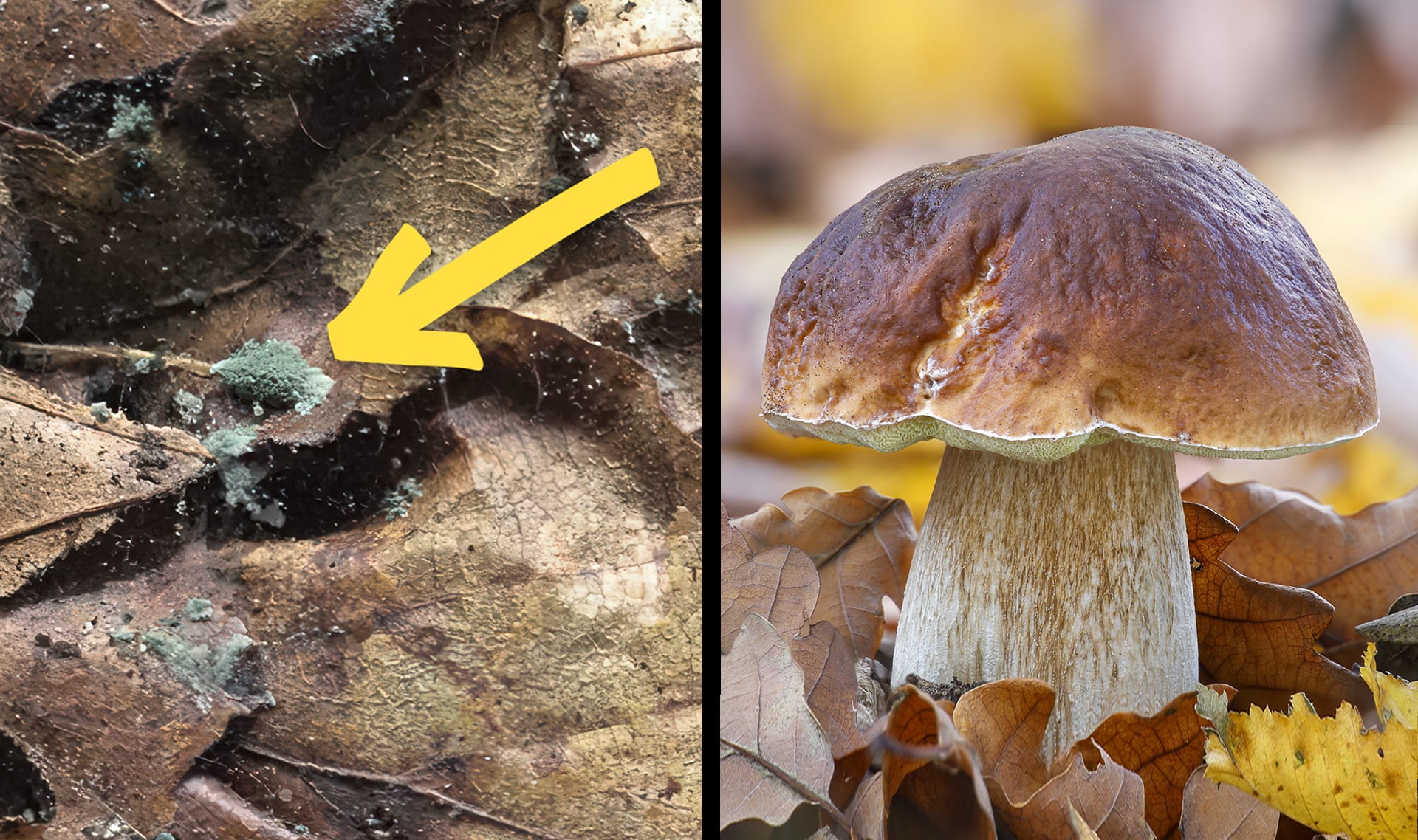
fungus (fungi)
10 of 14
a living thing that is a decomposer, such as a mold or mushroom
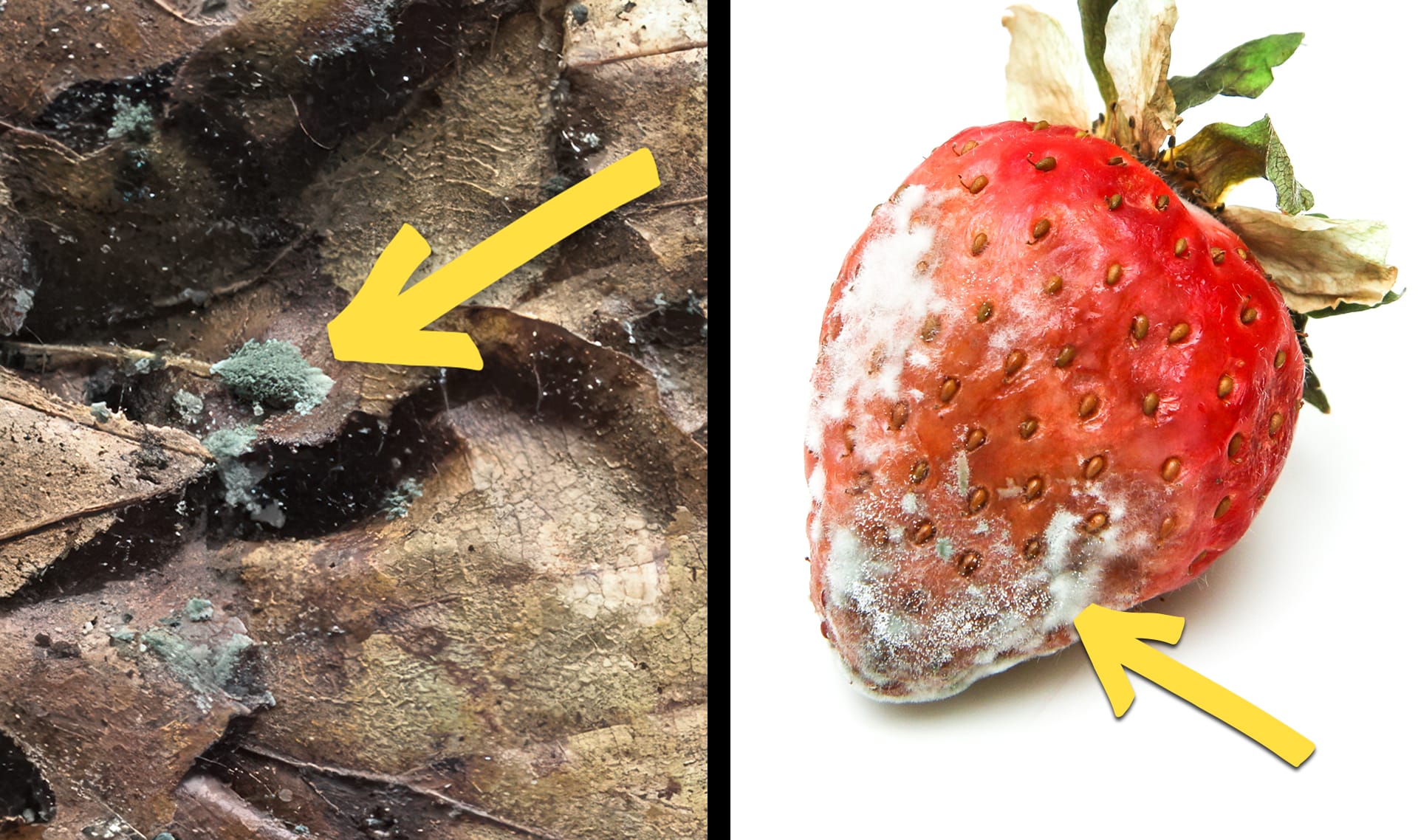
mold
11 of 14
a type of fungus that often decomposes food
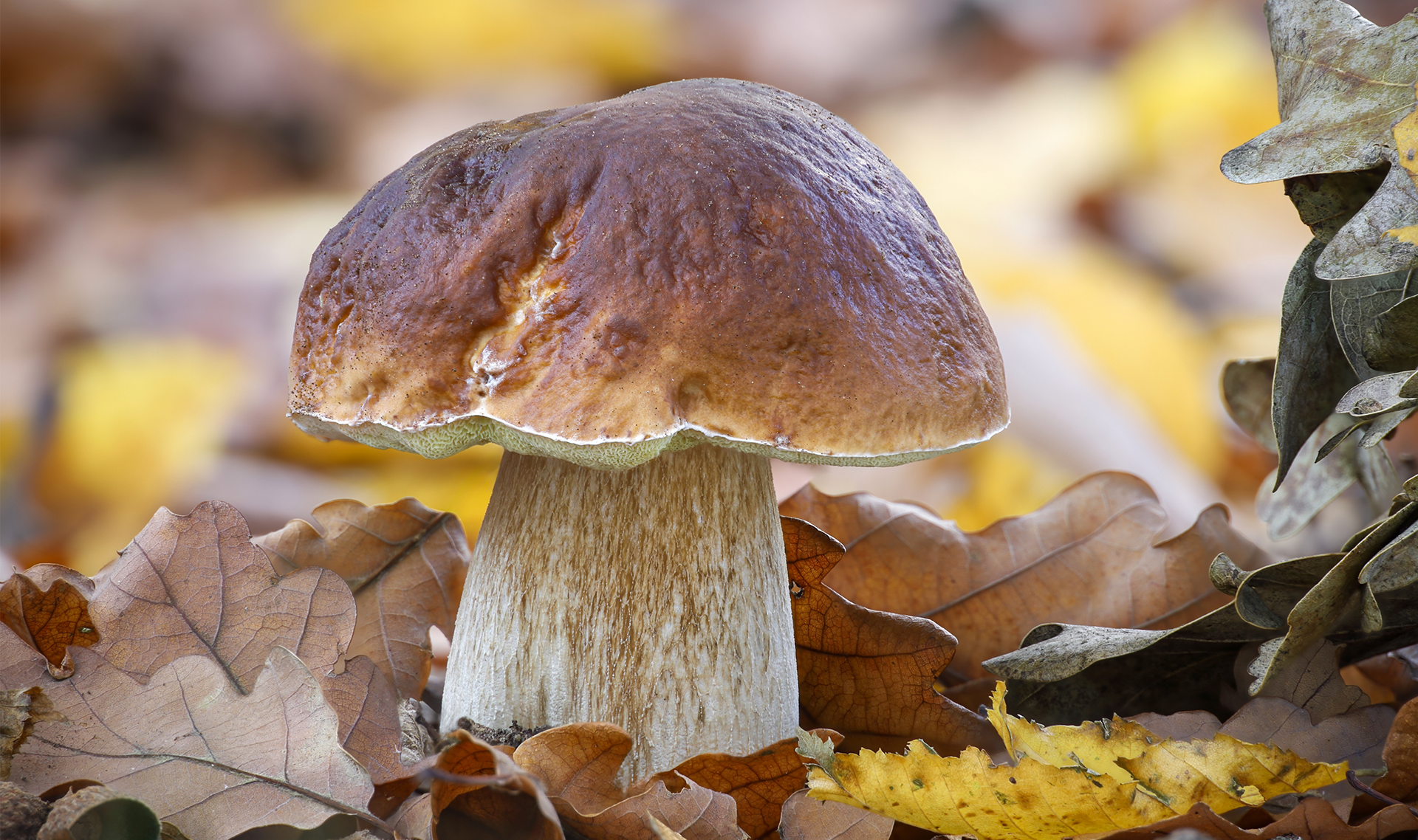
mushroom
12 of 14
a type of fungus that usually has a stalk and cap
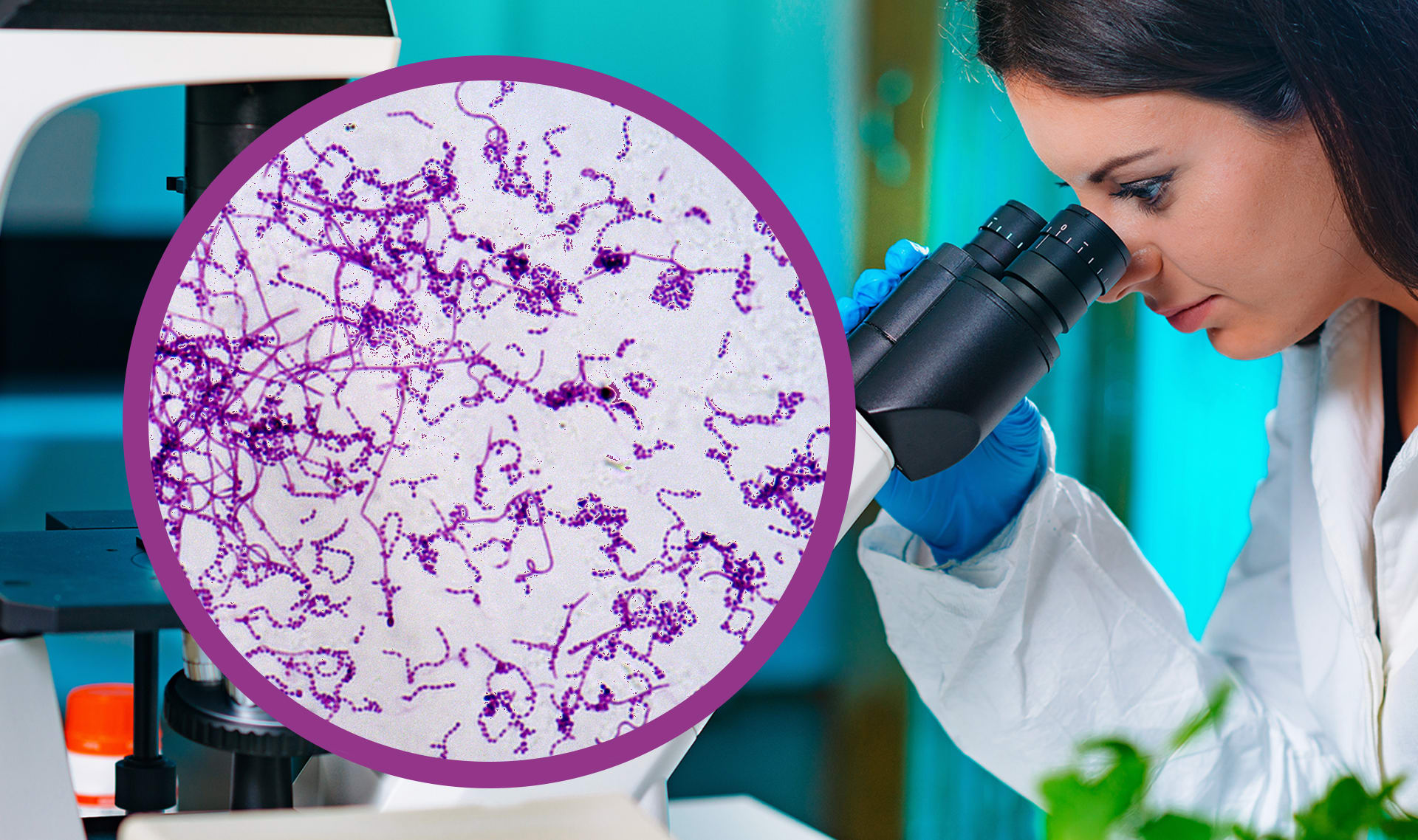
bacteria
13 of 14
an organism that is usually a decomposer; some cause illness
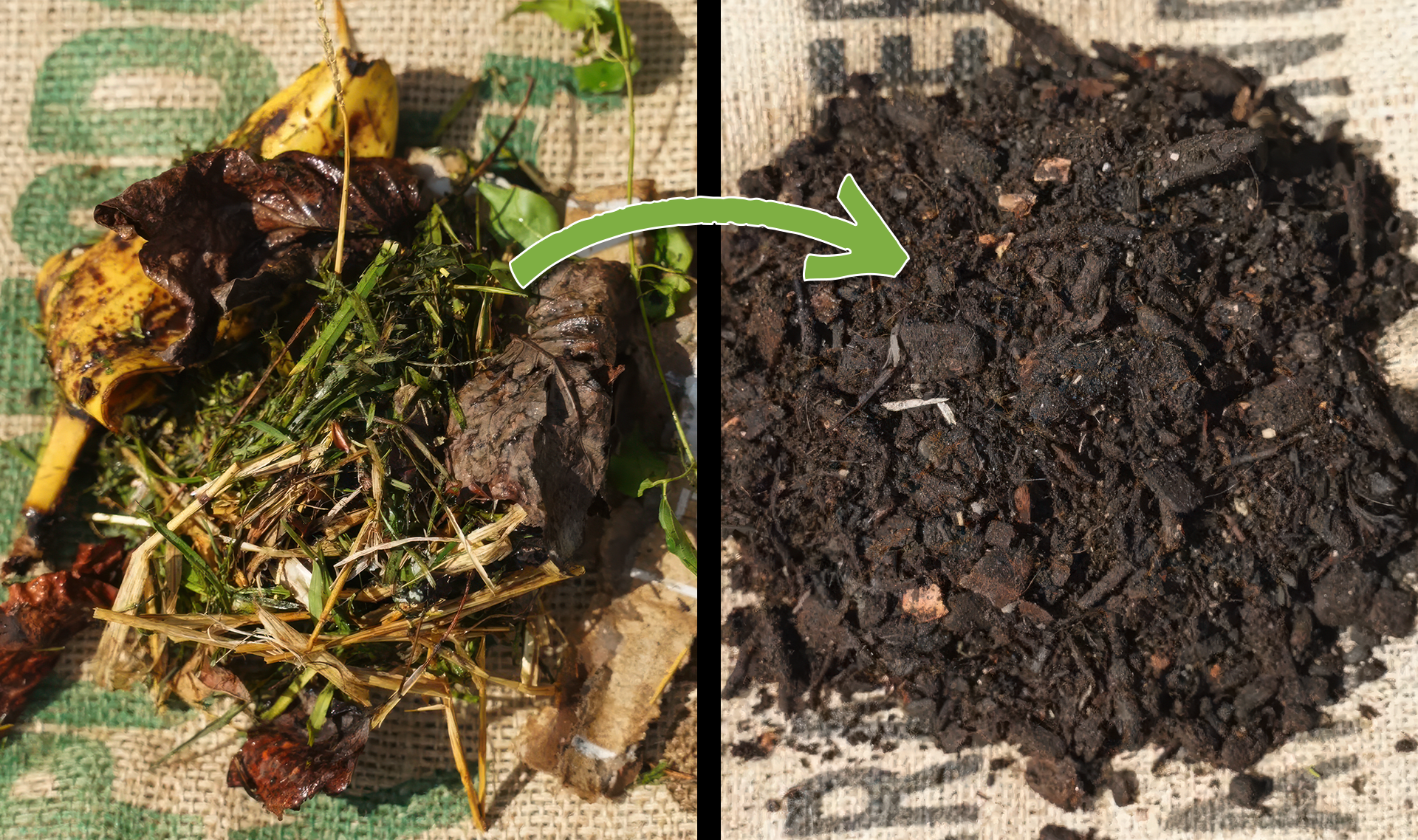
compost
14 of 14
decomposed material that can be used as fertilizer