
Get a free trial until June 30, 2027!
New members get access to our science units, hands-on activities, mini-lessons, & more!

New members get a free trial through June 2027!

Back

Spanish narration on!

Click play to start.

Back

Máquina de Rube Goldberg

Energizing Everything Unit
Anchor Phenomenon
Energy & Modeling
4.7 (2206 reviews)
Lesson narration:
Scroll for prep

FENÓMENO DE ANCLAJE:

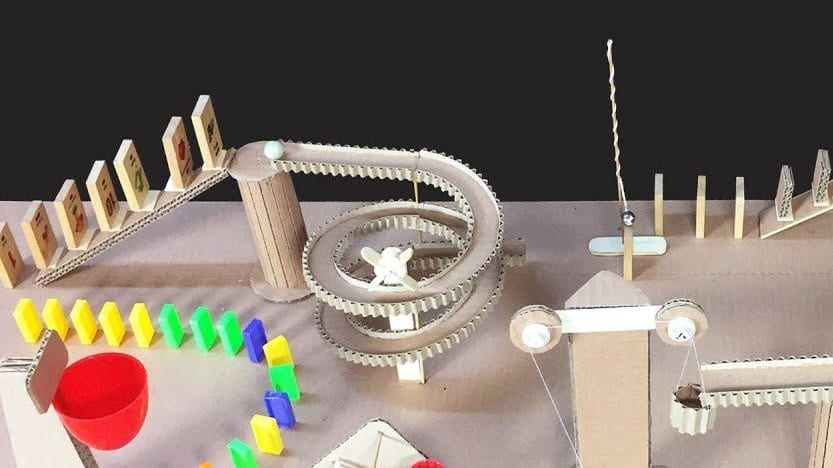
OK Go es una banda de rock de Chicago, Illinois en Estados Unidos. No solo producen música muy buena; ¡también hacen videos musicales que son geniales! Veamos el video musical de la canción “This Too Shall Pass.” ¡Mientras lo ves, piensa sobre las cosas interesantes que hay en el video!

PIENSA-JÚNTATE-COMPARTE:

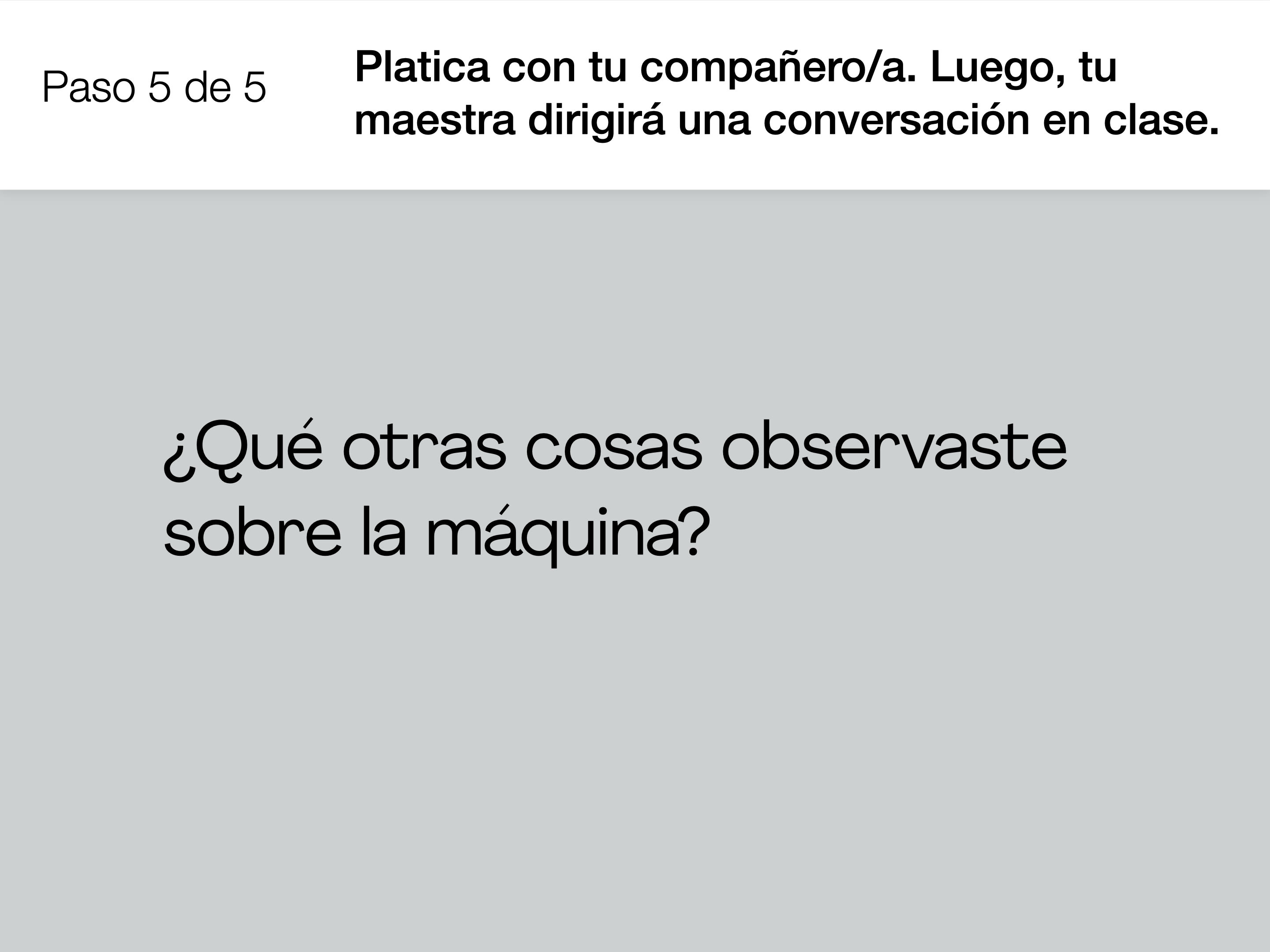
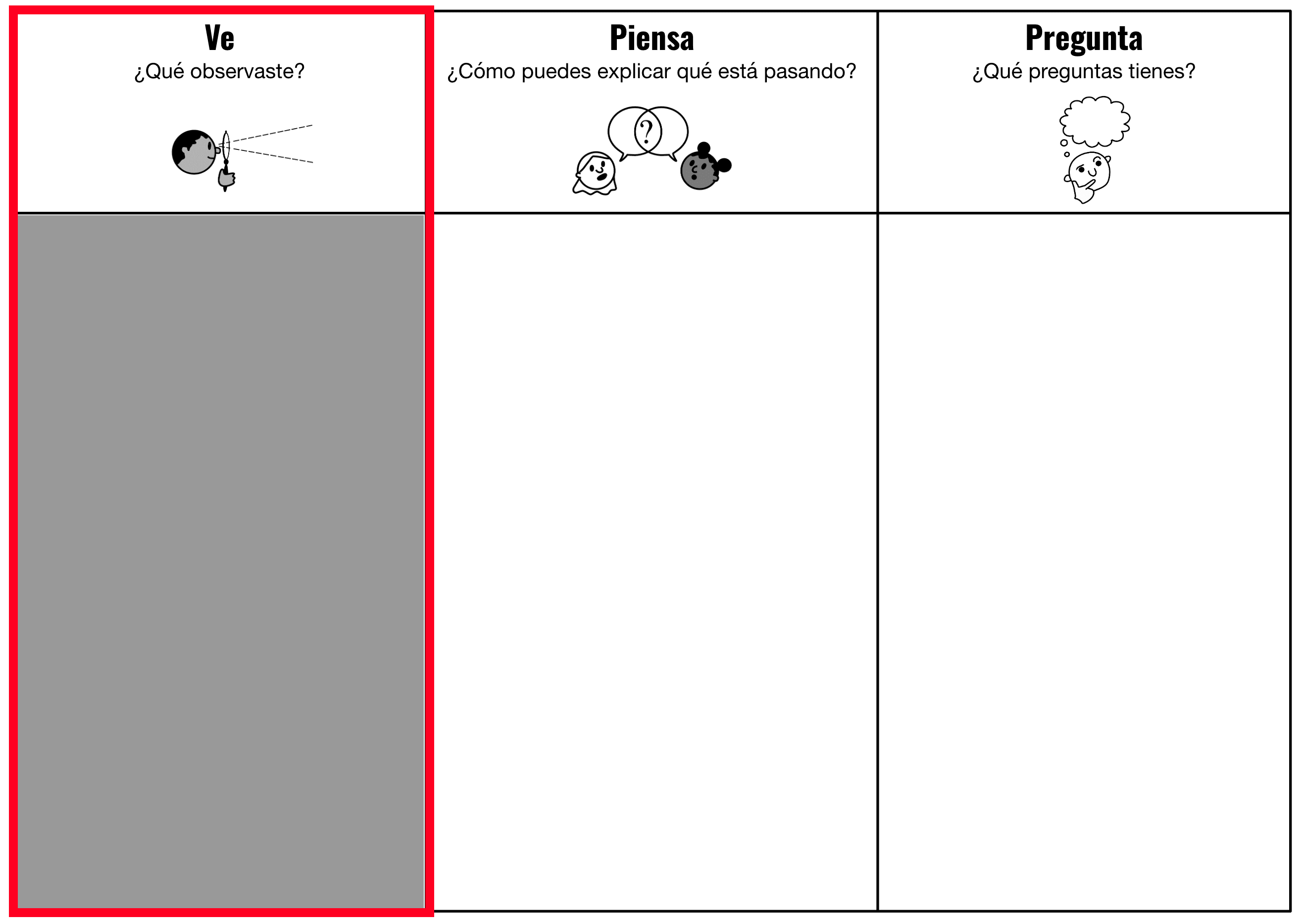
¿Qué observaste sobre los movimientos de la máquina?

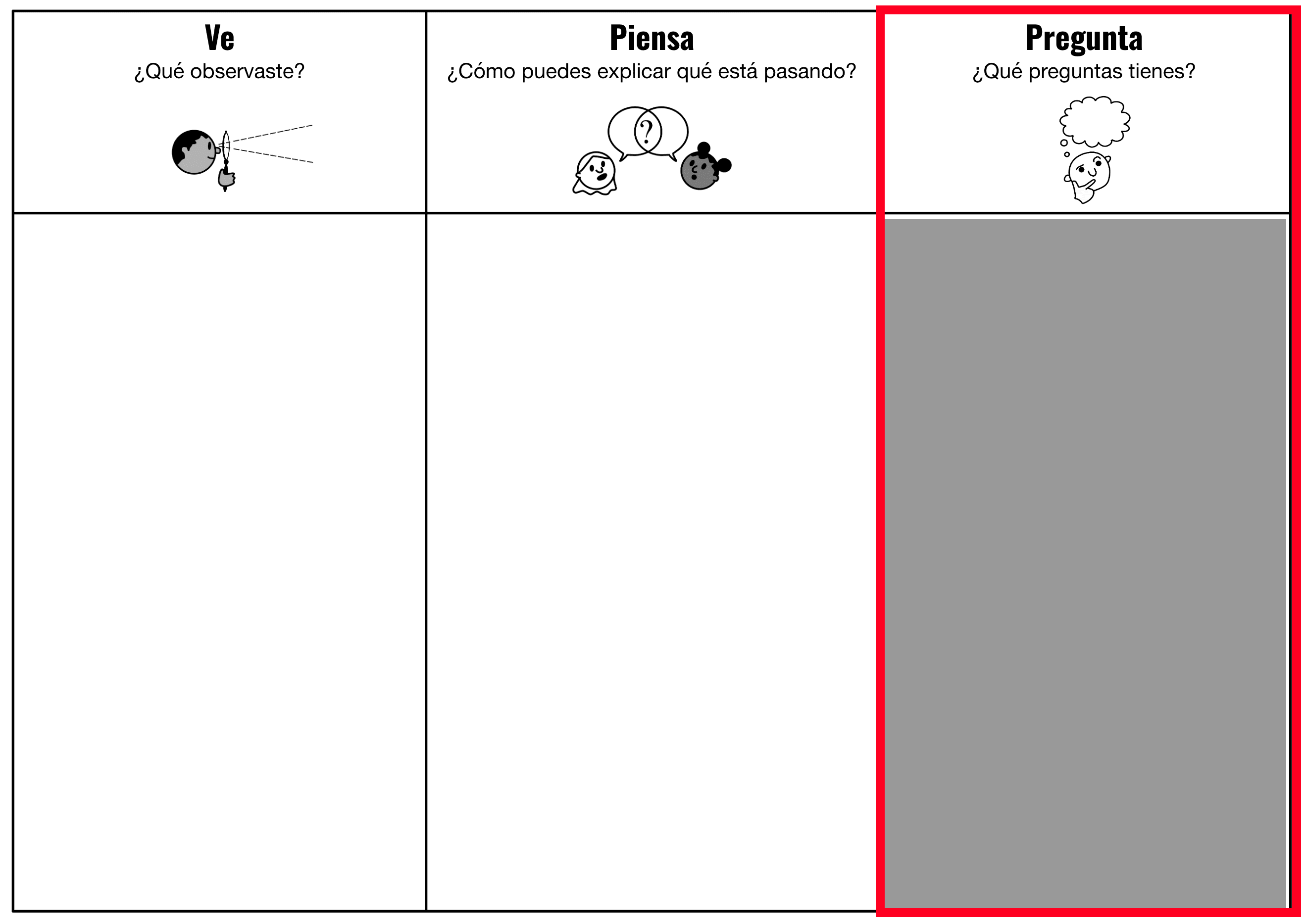
Escribe tus observaciones en la primera columna de tu tabla de “ve-piensa-pregunta”.
PIENSA-JÚNTATE-COMPARTE:

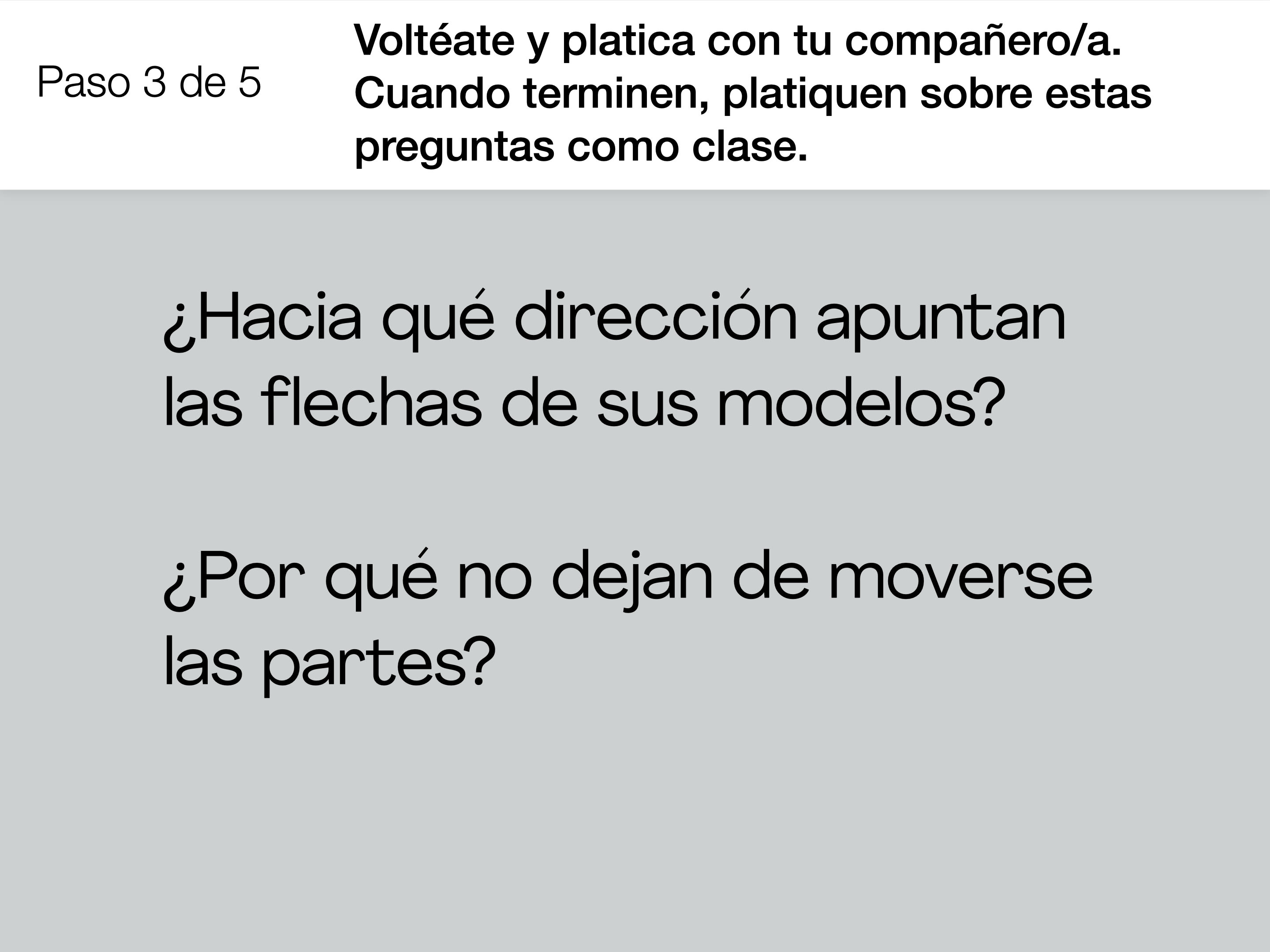
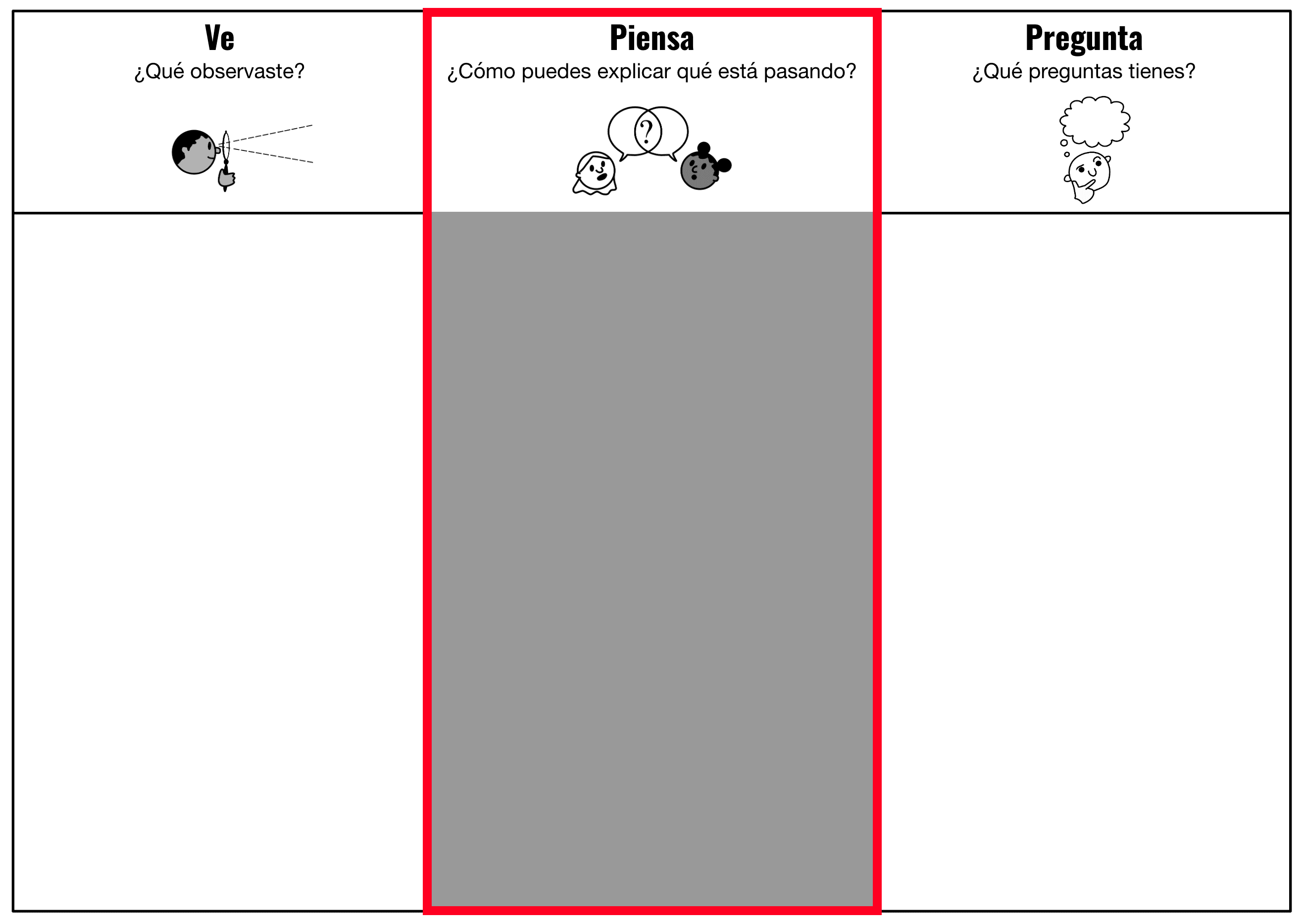
¿Por qué crees que la máquina se sigue moviendo?

Escribe tus explicaciones en la segunda columna de tu tabla de "ve-piensa-pregunta”.
PIENSA-JÚNTATE-COMPARTE:

¿Qué preguntas tienes sobre cómo se sigue moviendo la máquina?

Escribe tus preguntas en la tercera columna de tu tabla de “ve-piensa-pregunta”.
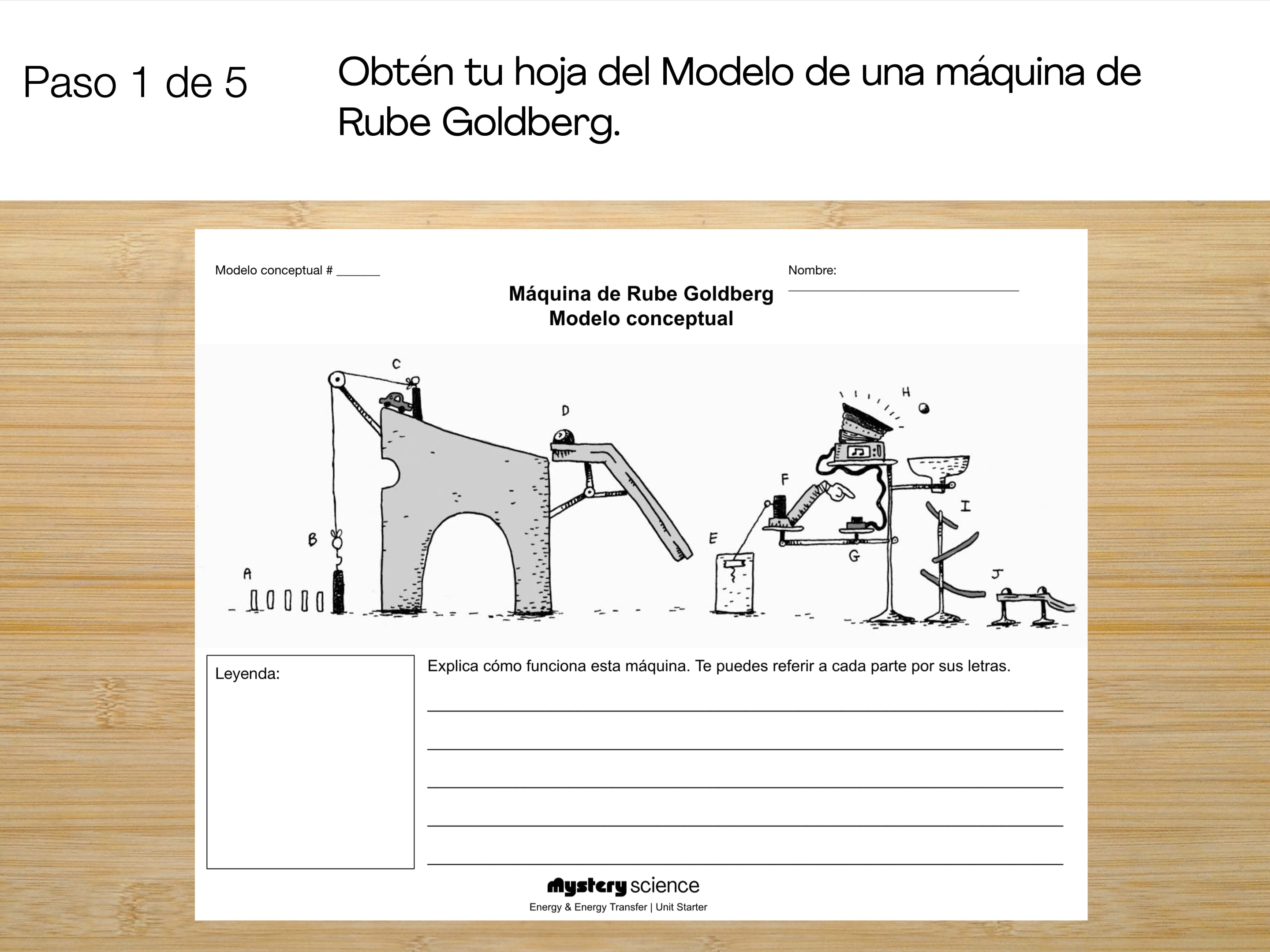
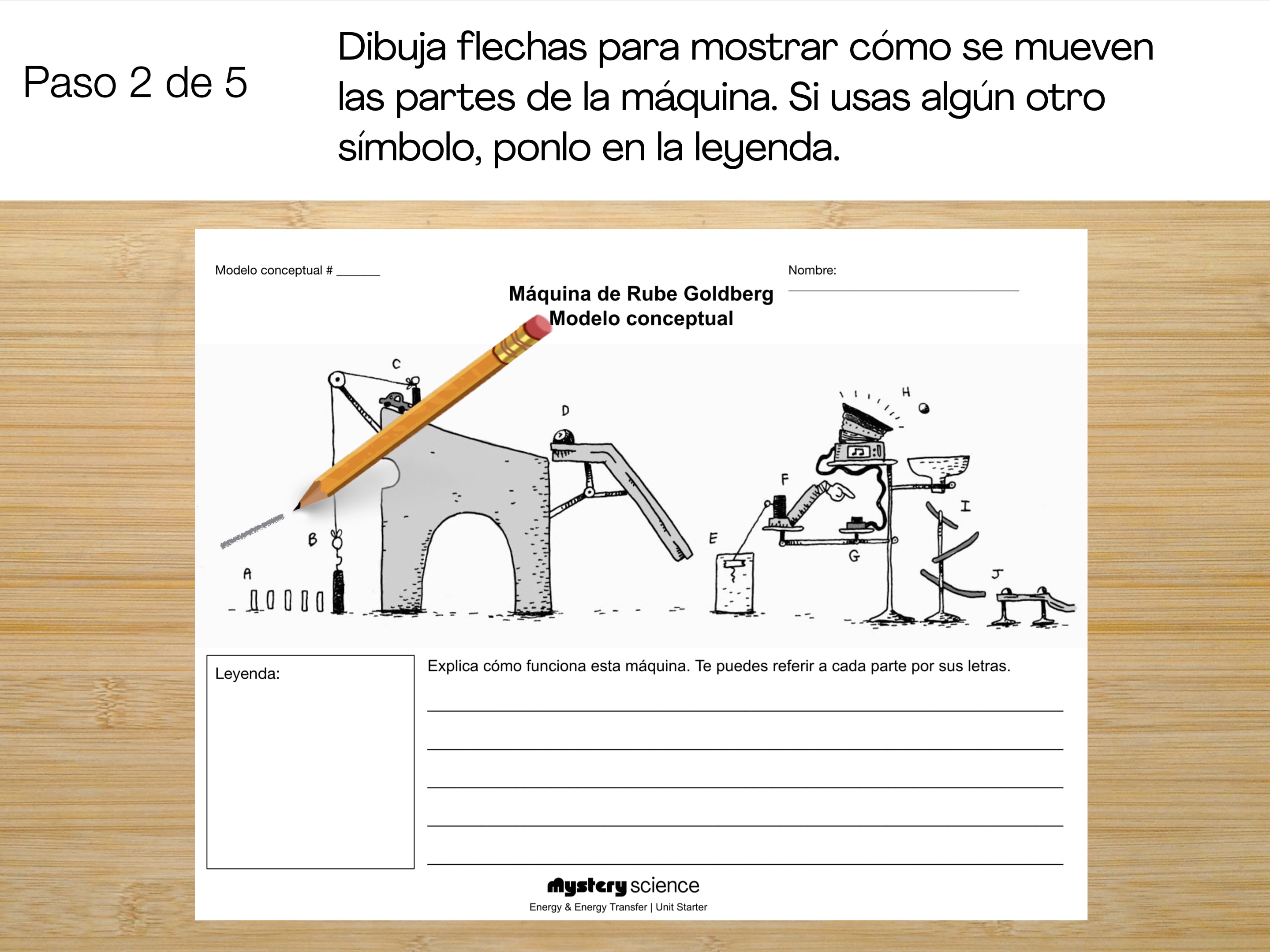
En la actividad de hoy, recibirás un dibujo de los primeros 30 segundos de la máquina que viste en el video musical. Usarás símbolos y etiquetas para explicar cómo funciona la máquina.

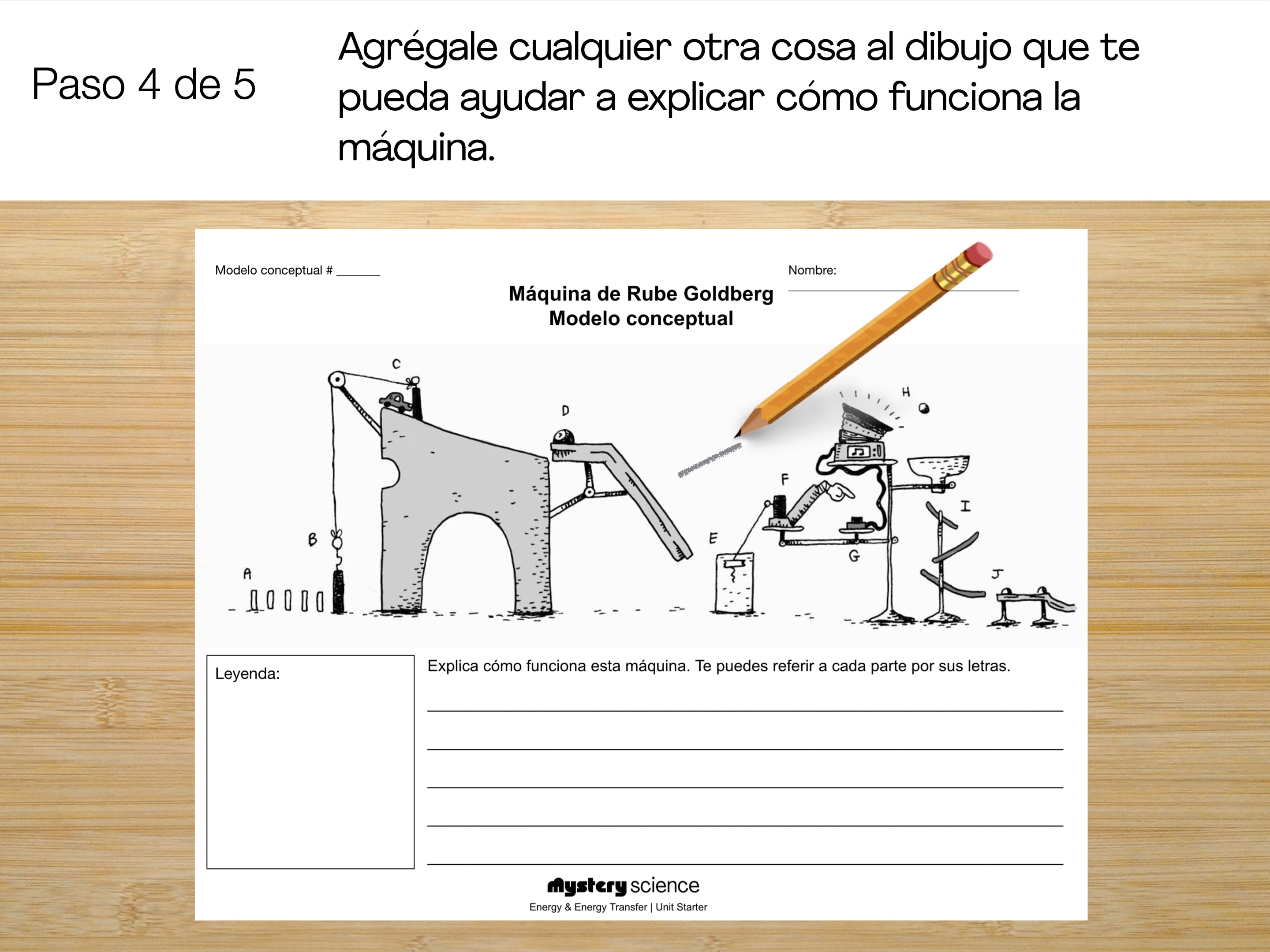
No te preocupes si todavía no sabes las respuestas correctas. Tendrás la oportunidad de cambiar o añadir cosas a tu dibujo después de cada lección en la unidad.

Te diré cómo hacerlo, paso a paso.

MODELO CONCEPTUAL:

Los científicos utilizan modelos para aprender y explicar las cosas. Actualizan el modelo, o lo cambian, conforme van aprendiendo más información.

Existen muchos tipos de modelos, pero tú acabas de crear un modelo conceptual.

Un modelo conceptual ayuda a los científicos a explicar cosas que no pueden ver. Después de cada lección, le agregarás a tu modelo cosas nuevas que has aprendido.

¡Haz terminado el fenómeno de anclaje!

Mensaje para los maestros:

Be sure to keep each student's Rube Goldberg model worksheet accessible. They will use it in the Anchor Connection after each lesson.

Teach Lesson 1 next: How can a car run without gas?

🎉 That’s it for this lesson! How did it go?

Extend this lesson

Share this lesson

Sign up now for more great lessons!
Máquina de Rube Goldberg
Energizing Everything Unit
Anchor Phenomenon
Energy & Modeling
4.7 (2206 reviews)

Featured Reviews

“The kids loved the music video, and are already talking about building their own chain reaction machines today at recess with materials from our classroom...totally unprompted by me. I love that it inspired creativity and curiosity in them.”
“They loved it! It was perfect to start this unit. My students were even picking up some great vocabulary to explain what they thought was happening. Loved it! ”
“Students were so engaged while watching the video, and even more so when they were trying to determine how each piece of the machine was moving. Considering we've already completed one unit from Mystery Science, they know they will be completing lab activities. I'm sure they have no idea what lies ahead in the lab activities for this particular unit, but I also have the same surety they will be pleasantly surprised!”
“This was a perfect phenomena to get the students talking, thinking, and get the excitement moving for our energy and motion unit!”
“The kids were fascinated by the Rube Goldberg machine, as was I. Several of them want to try building their own.”
“The kids LOVED the video. It was great to be able to go back and watch it again. We even watched parts of it in slow motion in order to see what was happening. One of my students even asked how many tries they did before it all worked! I'm so glad this has been added, so they can see the process and know it isn't easy before they have to make their own machine!”
“Love the Rube Goldberg Machine! And the students loved it too. So much to talk about and discuss!”
“What a way to motivate the kids and get them thinking! It was great!”
“I loved the anchoring lesson. It allows the class to go a bit deeper, and the model allows the students to add things to it as they gain knowledge throughout the unit”
“It was great to examine each part - the discussions that arose were terrific.”
“They loved the video! It was so easy to teach!”
“The kids were engaged with the video and were having conversations about cause and effect (transfer of energy).”
“The music video was so engaging. I am eager to be able to have this anchor lesson to make the rest of the lessons tie together.”
“The students had fun watching and wondering how the machine was working and how energy was used up in the time it took for all parts to work!”
“I love the addition on the anchor layer. It will really help to unify the mysteries and build deeper-thinking. Very constructivist in nature. ”
“The kids had some great questions and were inspired to build their own Rube Goldberg. ”
“The students enjoyed seeing something so popular and current. ”
“The best part was watching different Rube Goldberg machines, then building our ouw!”
“This was our second time looking at the video, we wanted to apply the knowledge we gained from the roller coaster lessons to our understanding of how the machine was transferring energy. The students love the video and the music!”
“I love that the kids are connecting back to the model with their learning during each subsequent lesson. ”
“It was great to ground the upcoming knowledge with a potential end of unit goal.”
“Students enjoyed watching the video and then identifying what is happening. I can't wait to see them change their models as they learn more. ”
“The best part was being able to refer back to the Rube Goldberg model and discuss changes or things we learned through the activities. I like the way it ties the unit together.”
“The students really enjoyed analyzing the music video and then making the connections between the machine on the worksheet and from the early parts of the music video.”
“They LOVED watching the video!”
“Students loved watching the music video over and over. They observed some interesting things and had a great first conceptual model. ”
“The video engaged and energized us We watched it several times, discussing what we observed. We completed the worksheet, and will be working toward designing a class rube goldberg machine for our STEM fair. They loved this because it was funny and they could relate to so many parts.”
“The girls were really excited to watch the OkGo video. We ended up watching it about 6 times (so far.) They did seem a little disappointed that we'd need to put it aside today and move on to the "car video" (that's as far as we've gotten in class), but I promised that Rube Goldberg machines would be woven throughout this unit. I think that including these anchor layers is a step in the right direction for teachers like me that use Mystery Science as a huge portion of their science instruction. ”
“Lots of thinking time and video was very engaging. ”
“It was a great way to get them interested and begin to think about questions they have. They really enjoyed the OK Go video. They came up with great questions and are excited to get started.”
Lesson narration:

Activity Prep

Print Prep

Standards

Jump to

Extend this lesson

Slow internet or video problems?
 
Energy Anchor Phenomenon: Rube Goldberg Machine

How did the lesson go?
Terrible OK Good Great Terrific!

How can we improve it?

If you'd like our team to reply to you, please Contact Support instead.

Thanks for your feedback! If you have a question or need help, please contact us. Please consider sharing your review:

Sorry the lesson didn't go well. We read every single review in an effort to improve our Mysteries.

Thanks for letting us know. We’ll wait to ask you for feedback until after you've actually taught it.

Thanks for the feedback! We read every single review in an effort to improve our Mysteries.

Is the video not playing properly?

Please follow these steps:

  1. Very rarely a video will fail to completely load in your browser. Try to reload this page to see if that fixes the problem.
  2. If reloading does not help, try our other video player .
  3. If the video still fails to play, open this video in a new tab and please let us know you’re having trouble. We want to fix this issue for you.

This episode is locked

This lesson is not included in your limited access.

View pricing

This content is available with a Mystery Writing membership

To unlock all lessons, your school or district needs a membership.

Message sent, nice work!

Following up can help!

Find resources to make your case on the FAQ page.

Oops! The email given is on our unsubscribed list.

Unfortunately, we can't reach out--but you can still share your thoughts on Mystery Science directly.

Check our our FAQ for resources, or contact us at support@mysteryscience.com for assistance.
Send to a different admin

We can help you request access

Write a quick note to your admin and we'll include a Mystery Science price quote for them to review.

This episode is locked

Your membership is expired. The archive of past Mini Lessons is not included in your limited access.

View pricing

Share with colleagues

Thanks for sharing!