
DISCUSS:
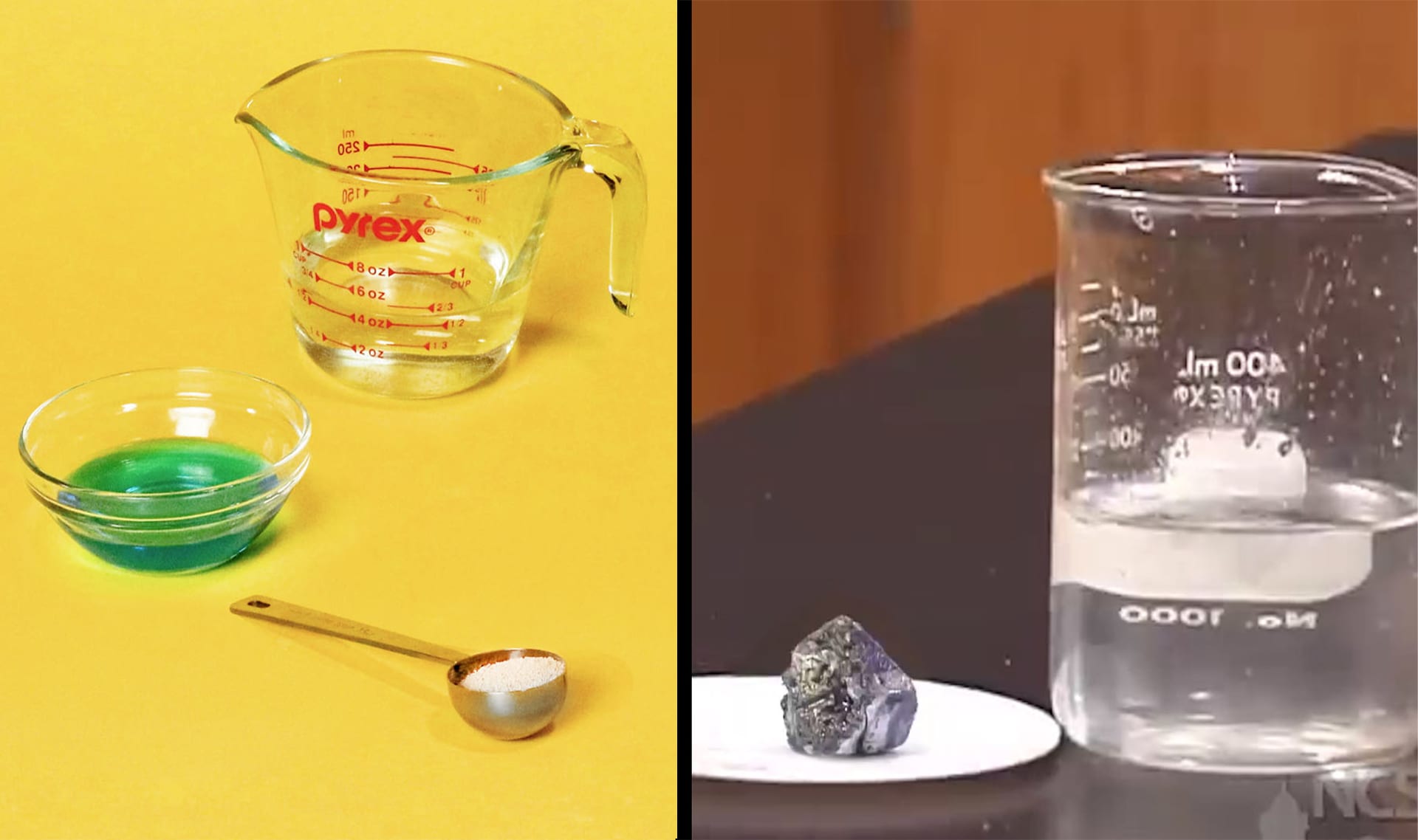
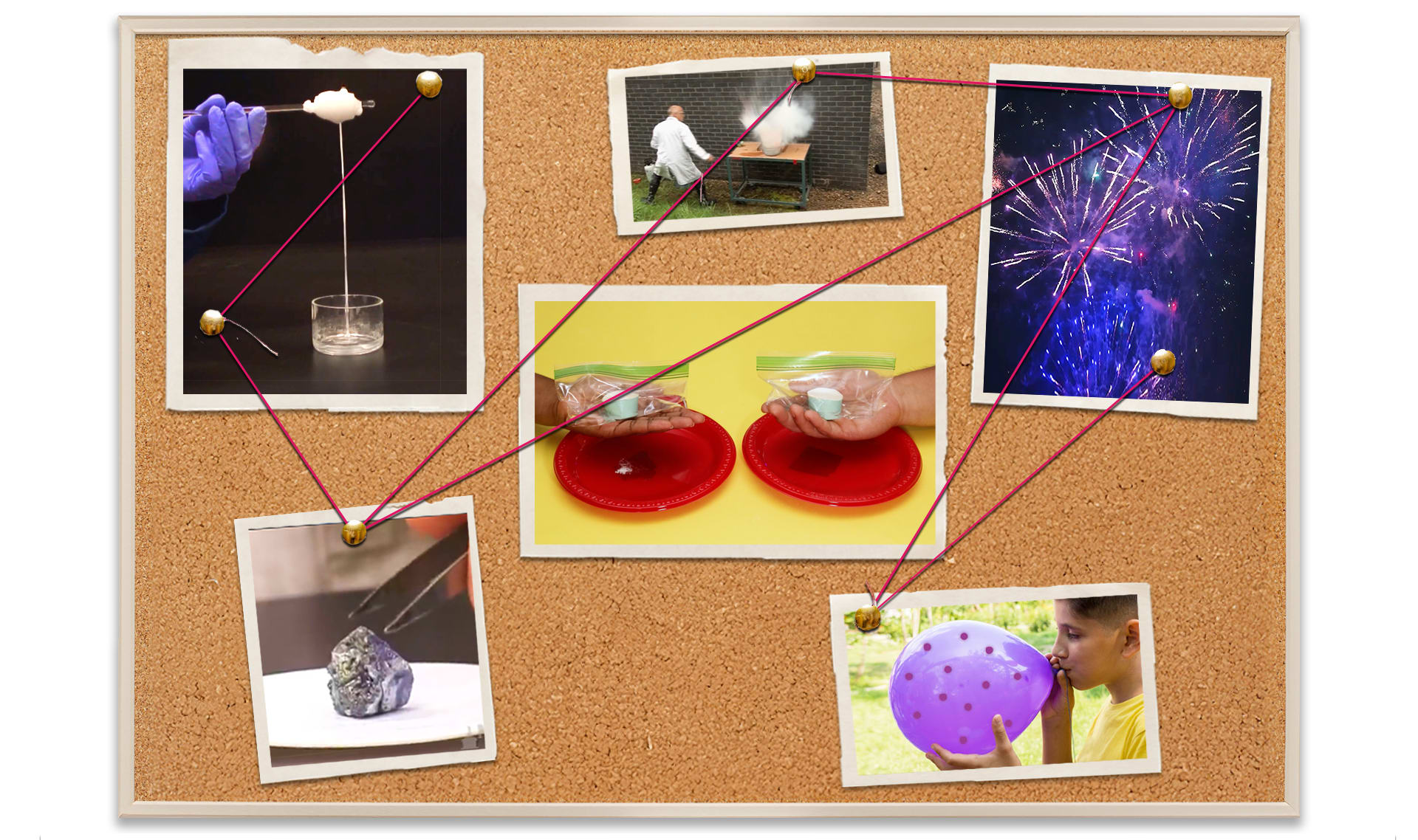
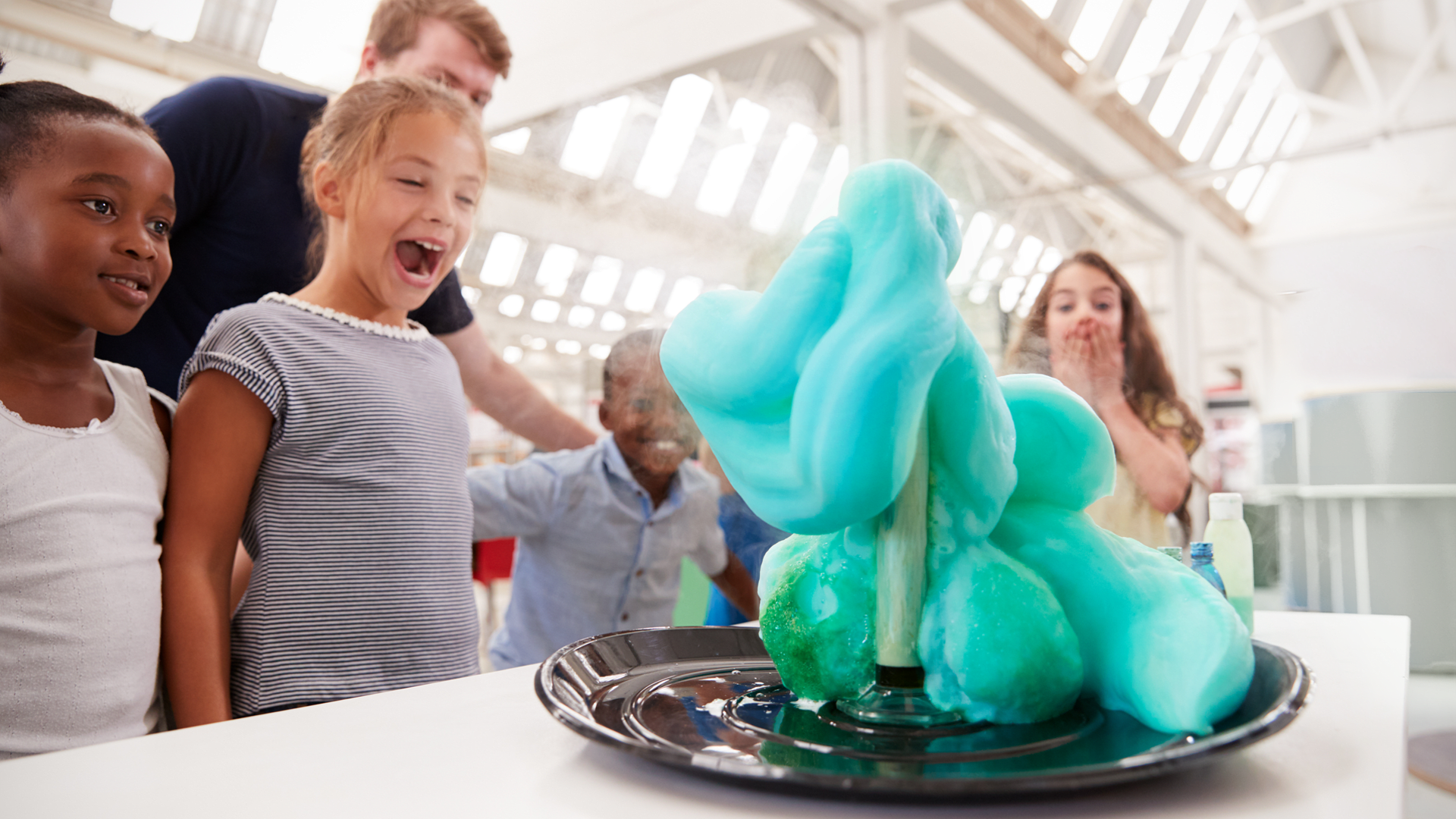
If chemical reactions can make gases, do you think they can make liquids or solids, too?
| Explosion Investigation worksheet | 30 copies |
| Explosion Investigation - Answer Key teacher-only resource | 1 copy |
|
Clean-up Supplies (Eg. Paper Towels)
|
1 roll |
|
Scissors
|
30 pairs |
|
Baking Soda
|
1 cup |
|
Corn Starch
|
1 cup |
|
Craft Sticks
|
15 sticks |
|
Dixie Cups (3 oz)
|
30 cups |
|
Plastic Cups (9 oz, Solo)
Vinegar can leak through paper cups.
|
45 cups
|
|
Plastic Plates (10")
|
30 plates |
|
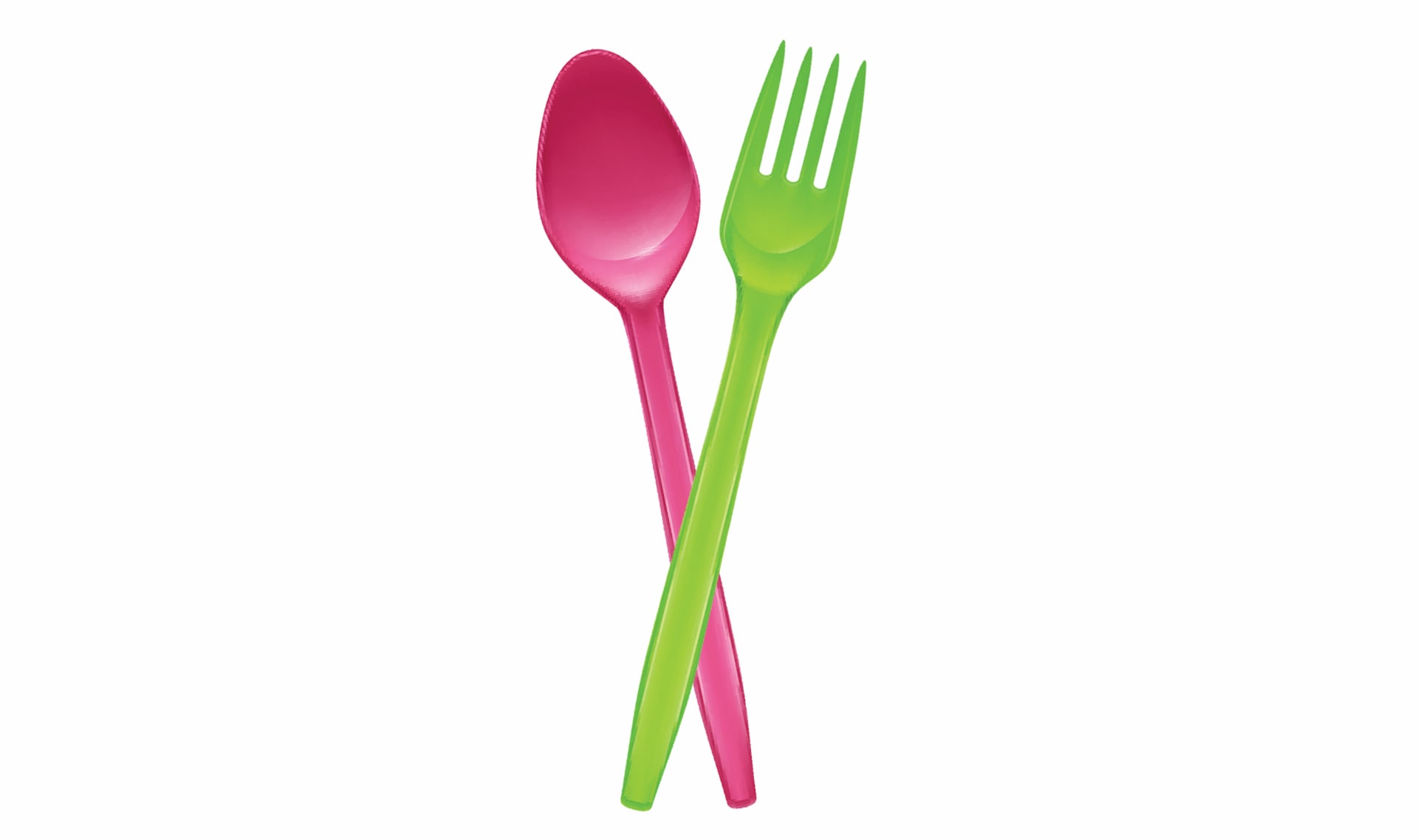
Plastic Spoons
|
45 spoons |
|
White Vinegar
|
8 cups |
|
Ziploc Bags (Snack Size)
We do not suggest using sandwich size bags because they need more vinegar and baking soda to inflate, and the resulting explosion is likely to overflow the plastic plate.
|
30 bags
|
OPTIONAL SUPPLIES |
|
|---|---|
|
Safety Glasses
|
30 pairs |
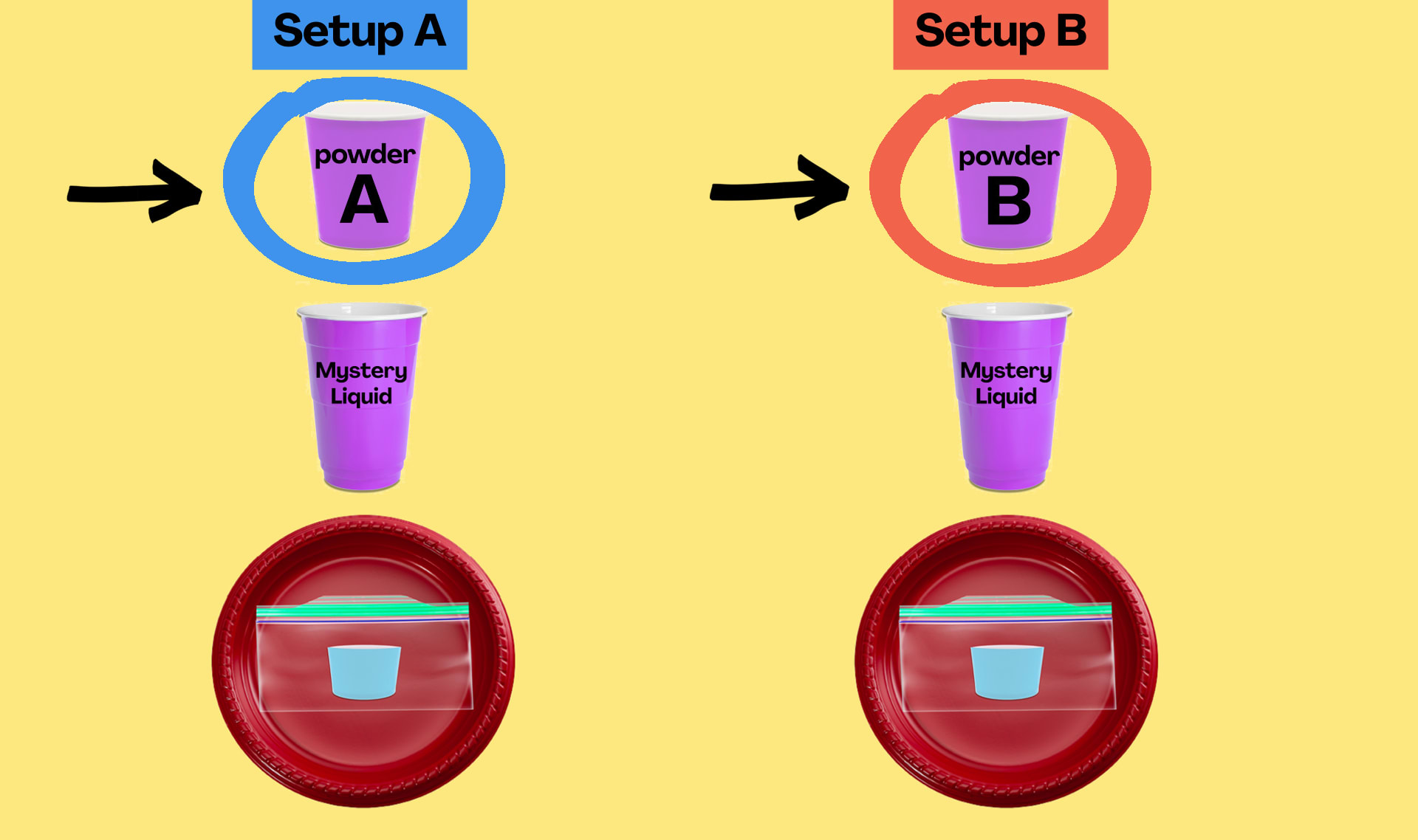
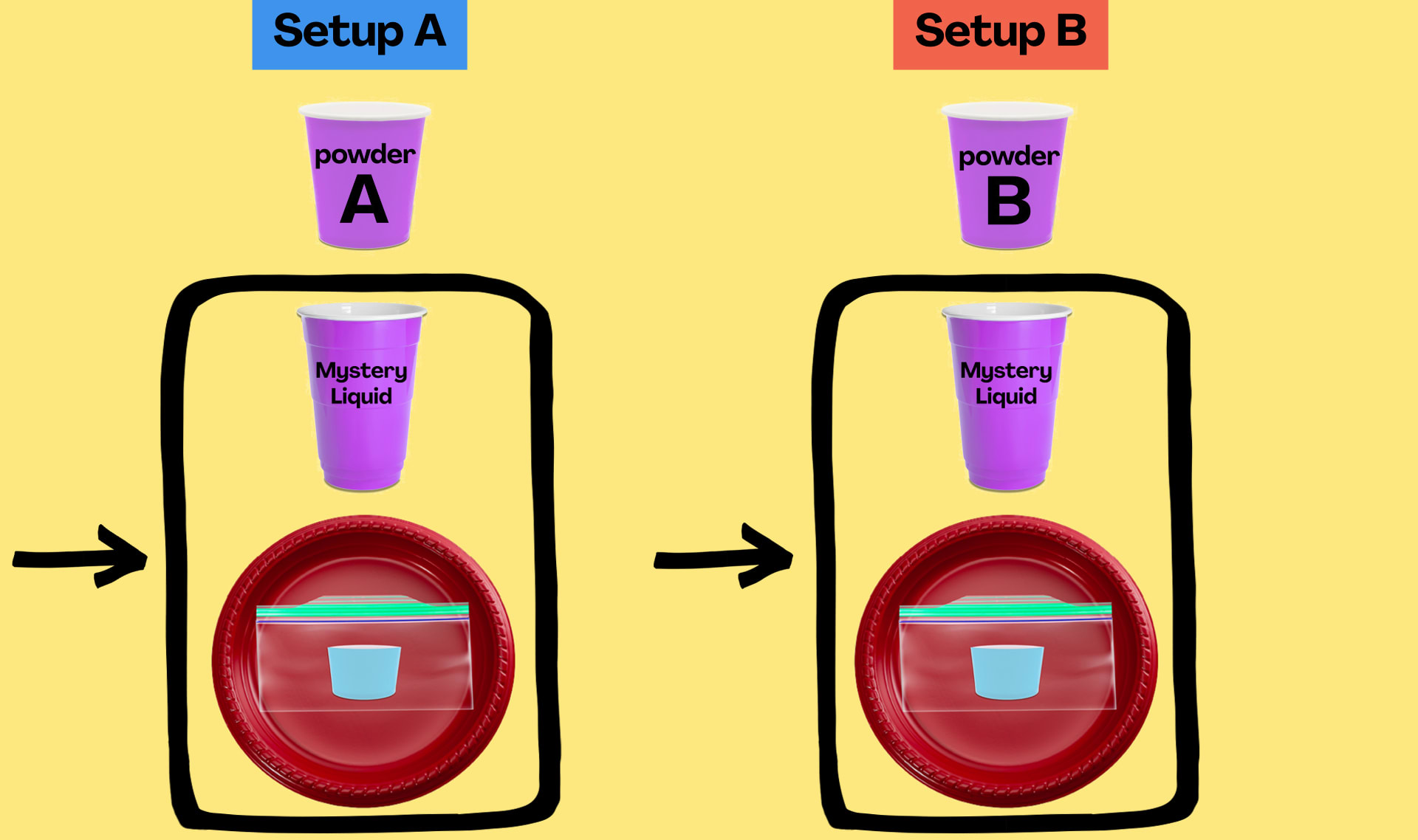
We suggest students work in pairs. Homeschool students can work on their own, but will need to do both setups for the experiment in order to run a fair test.
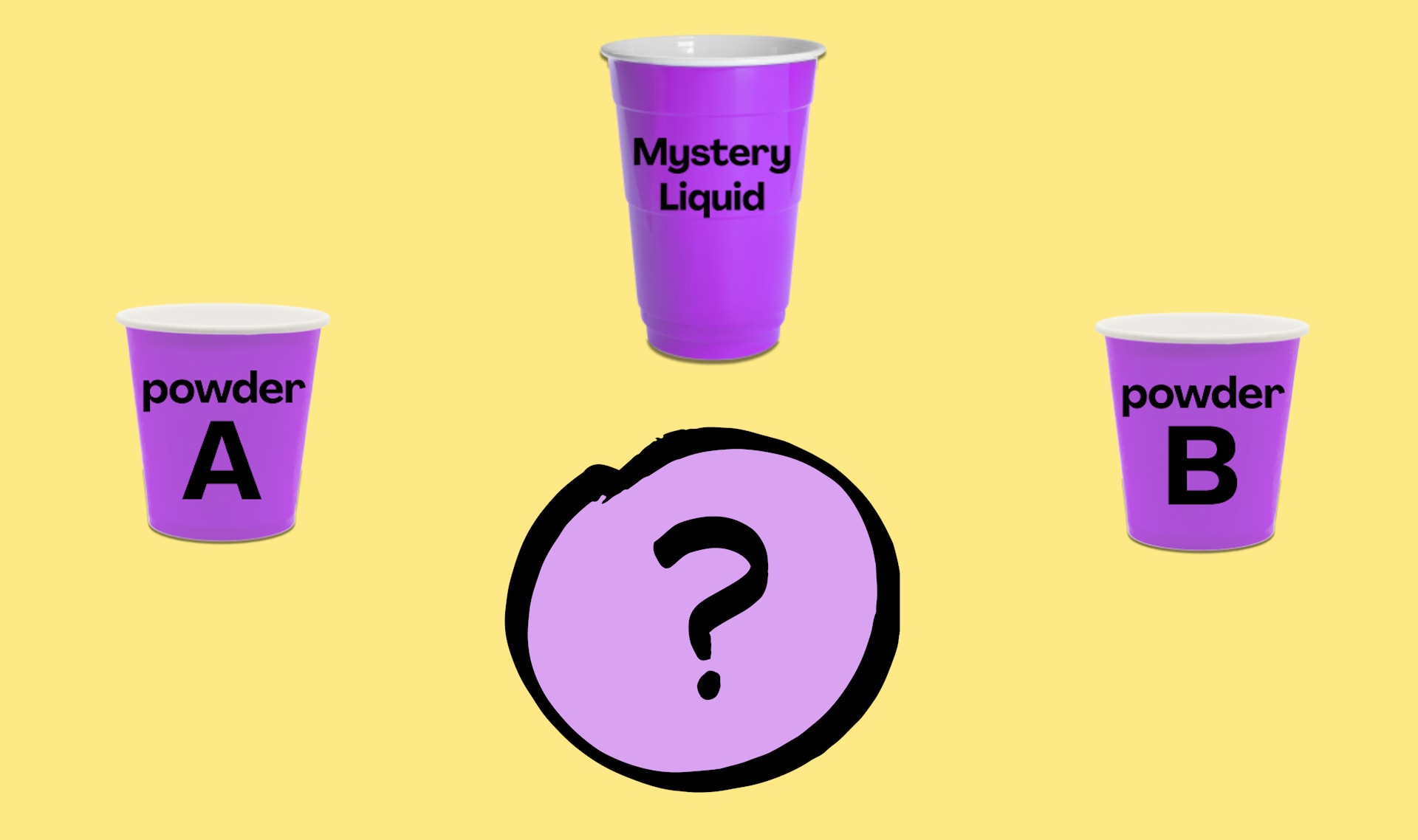
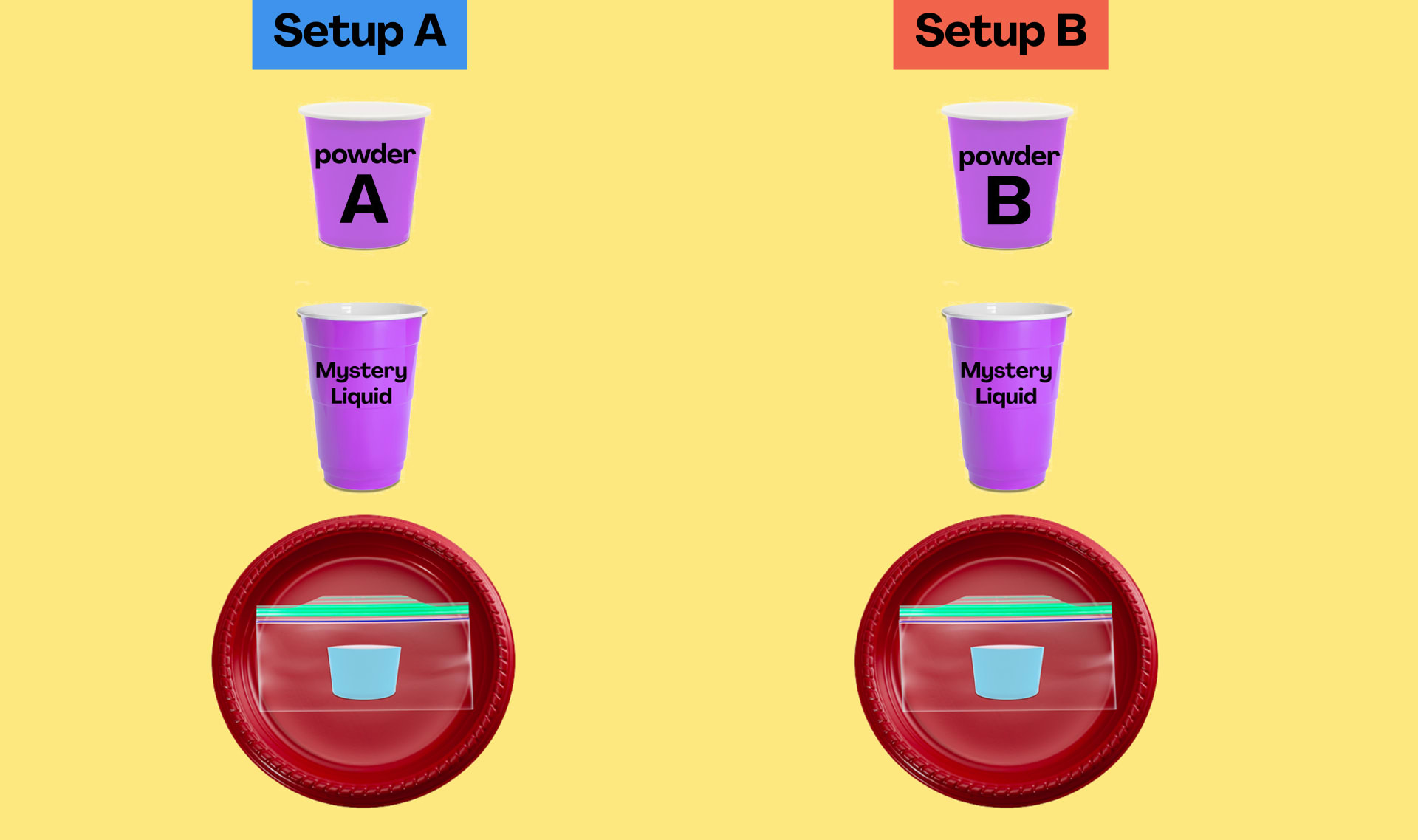
Divide your plastic cups into three equal piles. Use a sharpie to label each cup in one pile "A", label those in the second pile "B", and those in the third pile "L" for liquid. Add a tablespoon of corn starch to each "A" cup, add a tablespoon of baking soda to each "B" cup. Pour a half cup of vinegar into each of the "L" cups. Then, place one spoon into each cup.
We suggest organizing supplies as shown below for easier distribution.
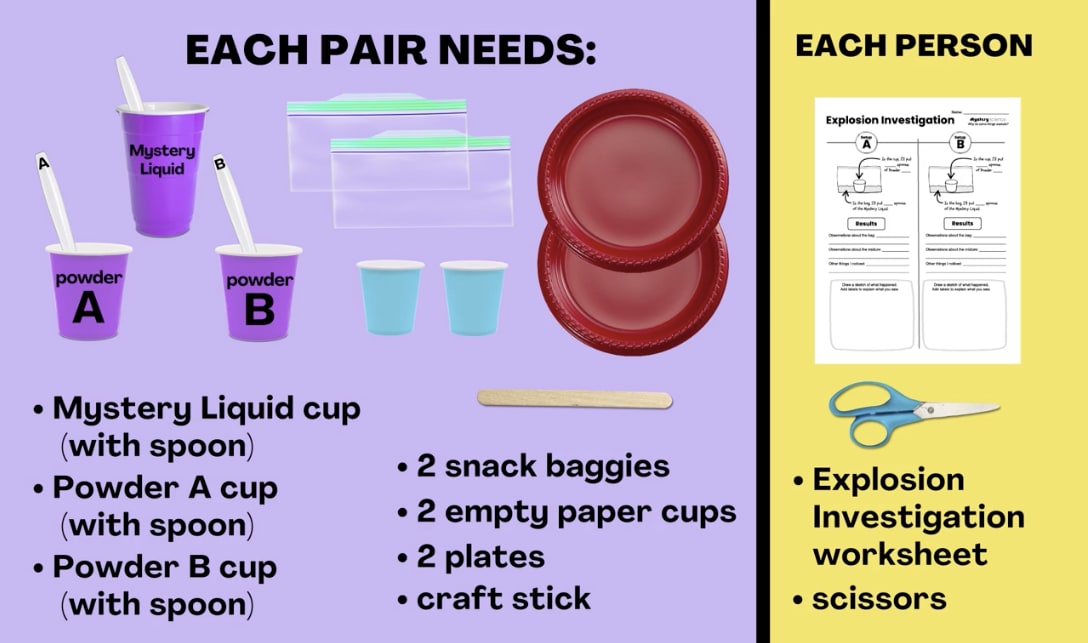
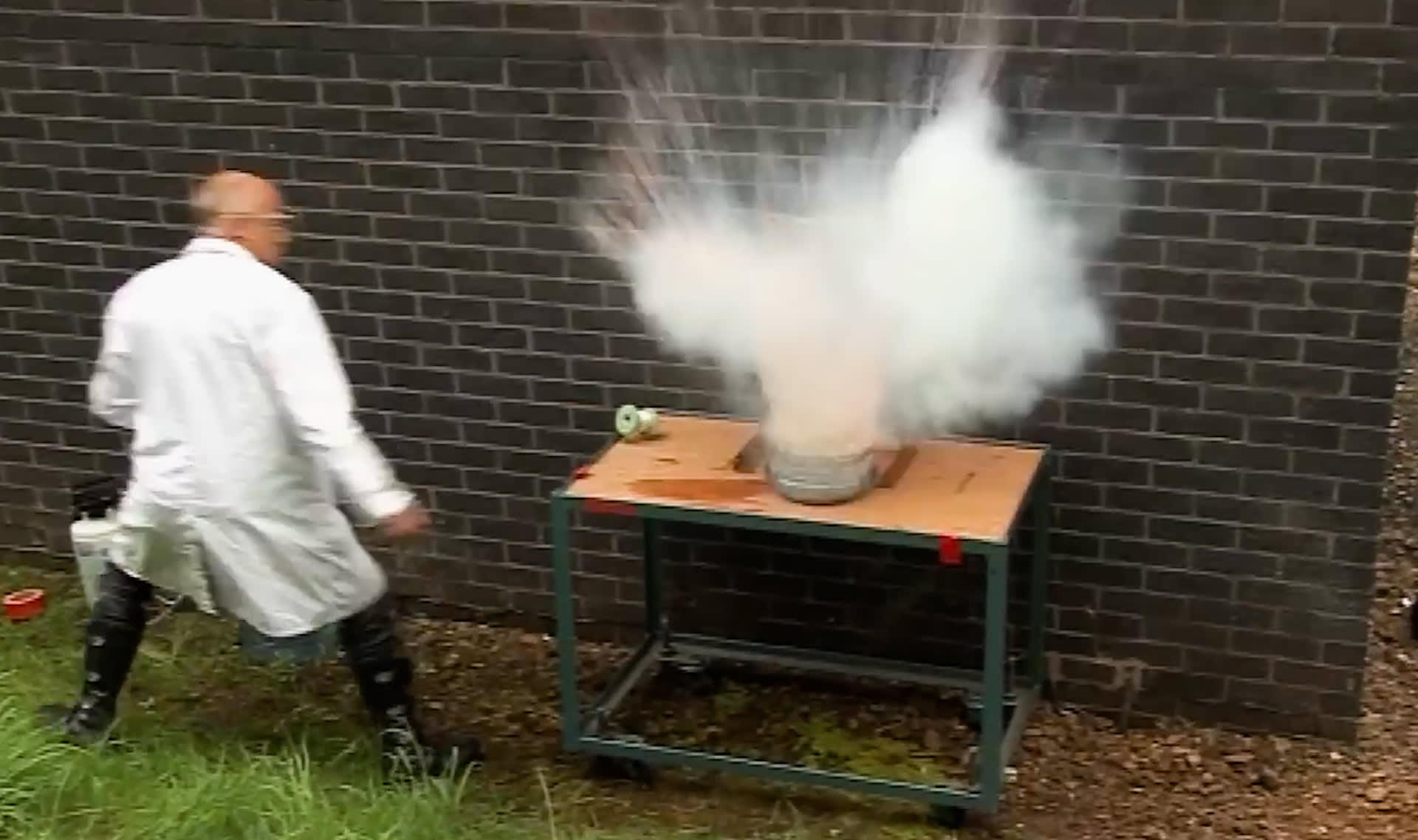
The plastic baggies are intended to inflate and pop. Some accommodations you can make to decrease noise levels include (1) reducing the amount of liquid and powder in the bags so that they inflate but do not pop, or (2) modifying the activity as a teacher-led demonstration.
Conduct an investigation to determine whether the mixing of two or more substances results in new substances.

Locked
6:10

Why is the sky blue?
Locked
4:41
Why do we call them doughnuts?
Locked
5:16
Could a turtle live outside its shell?