
Get a free trial until June 30, 2027!
New members get access to our science units, hands-on activities, mini-lessons, & more!

New members get a free trial through June 2027!

Back
Back

Why do some things explode?

Chemical Magic Unit
Lesson 4 of 5
Chemical Reactions & Fair Tests
3.9 (9 reviews)
Lesson narration:
Scroll for prep
DISCUSS:
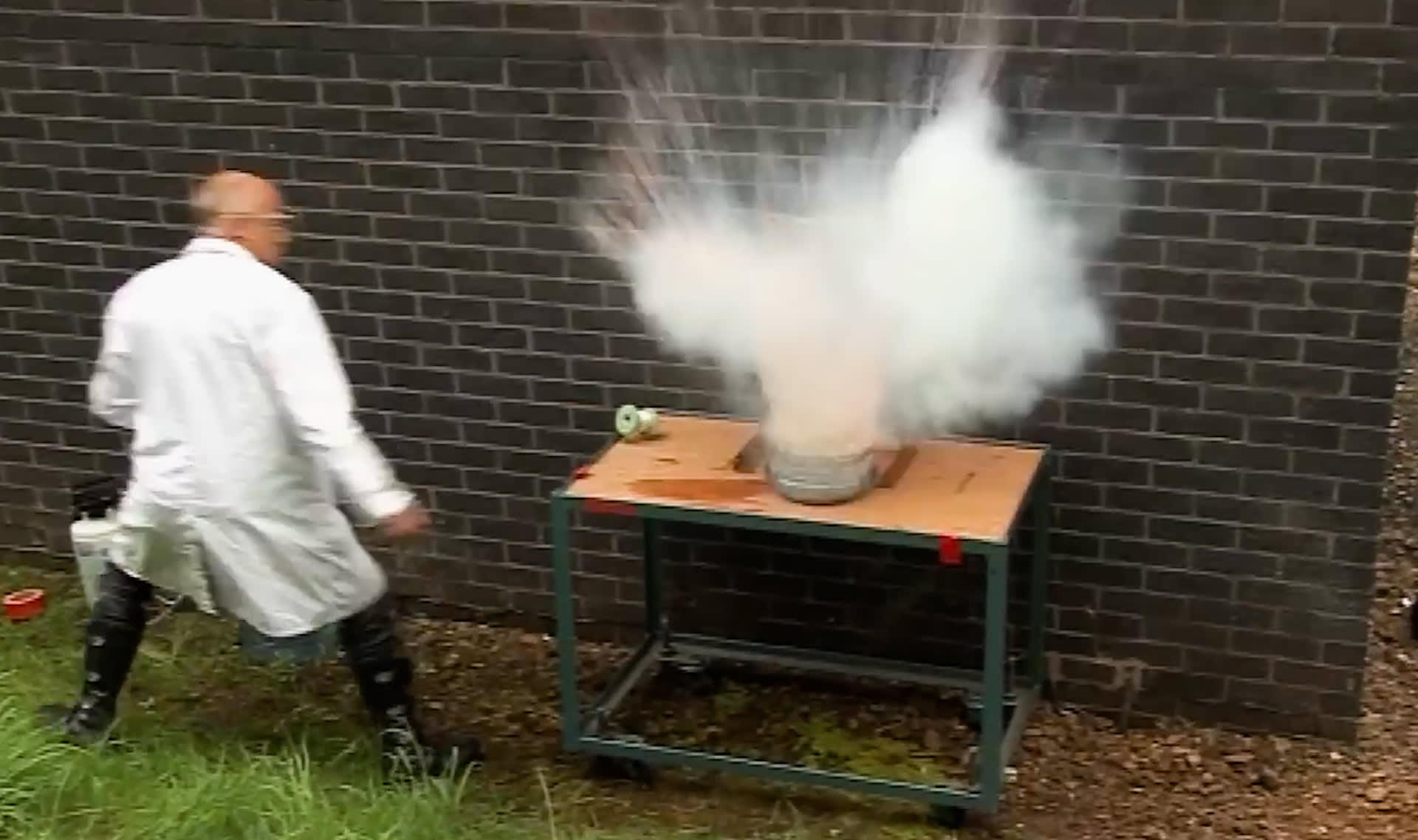
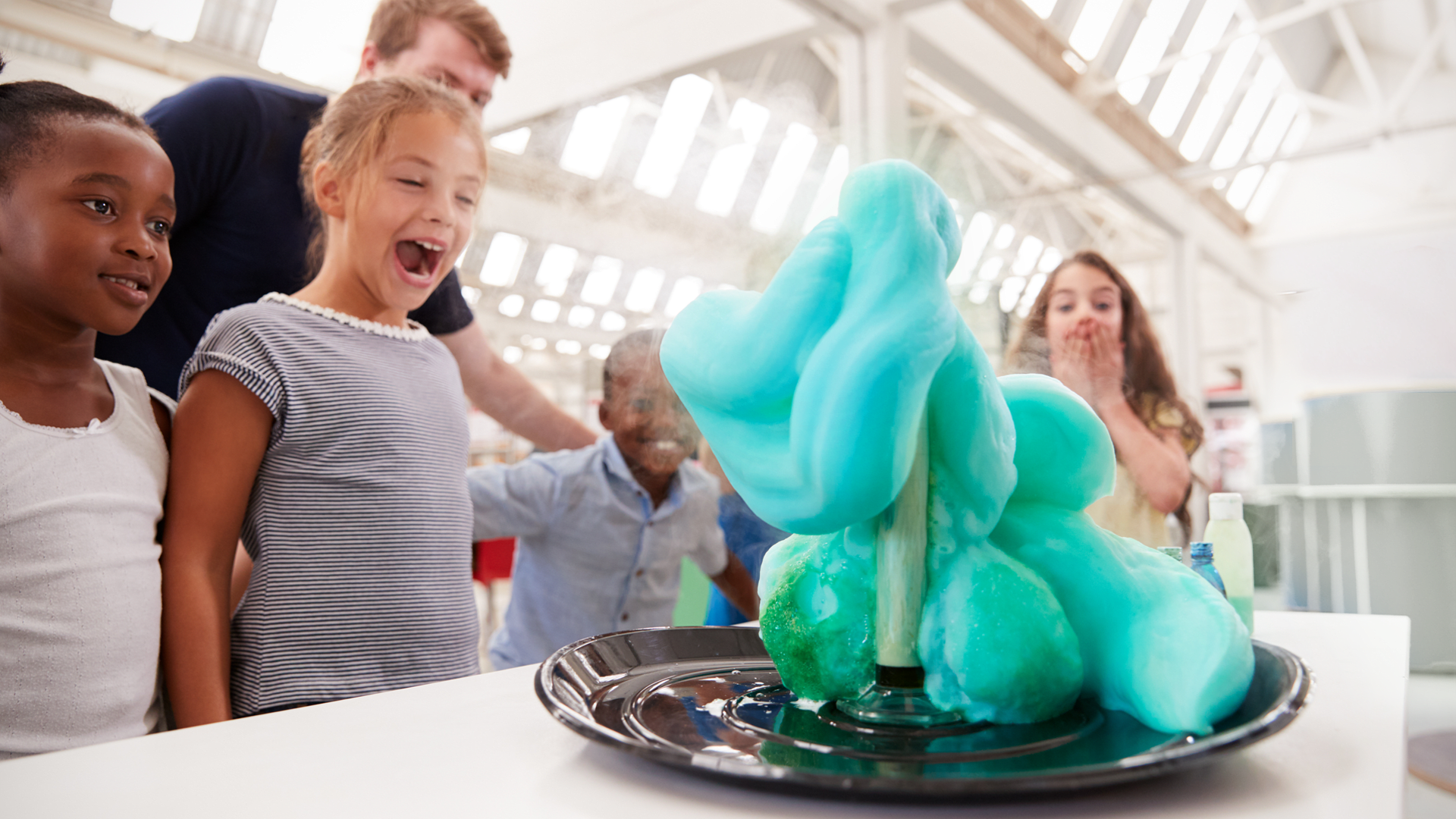
What was it that made this explosion happen?
Was it the metal? Or the water? Or was it both? What do you think?
Slide Image
DISCUSS:
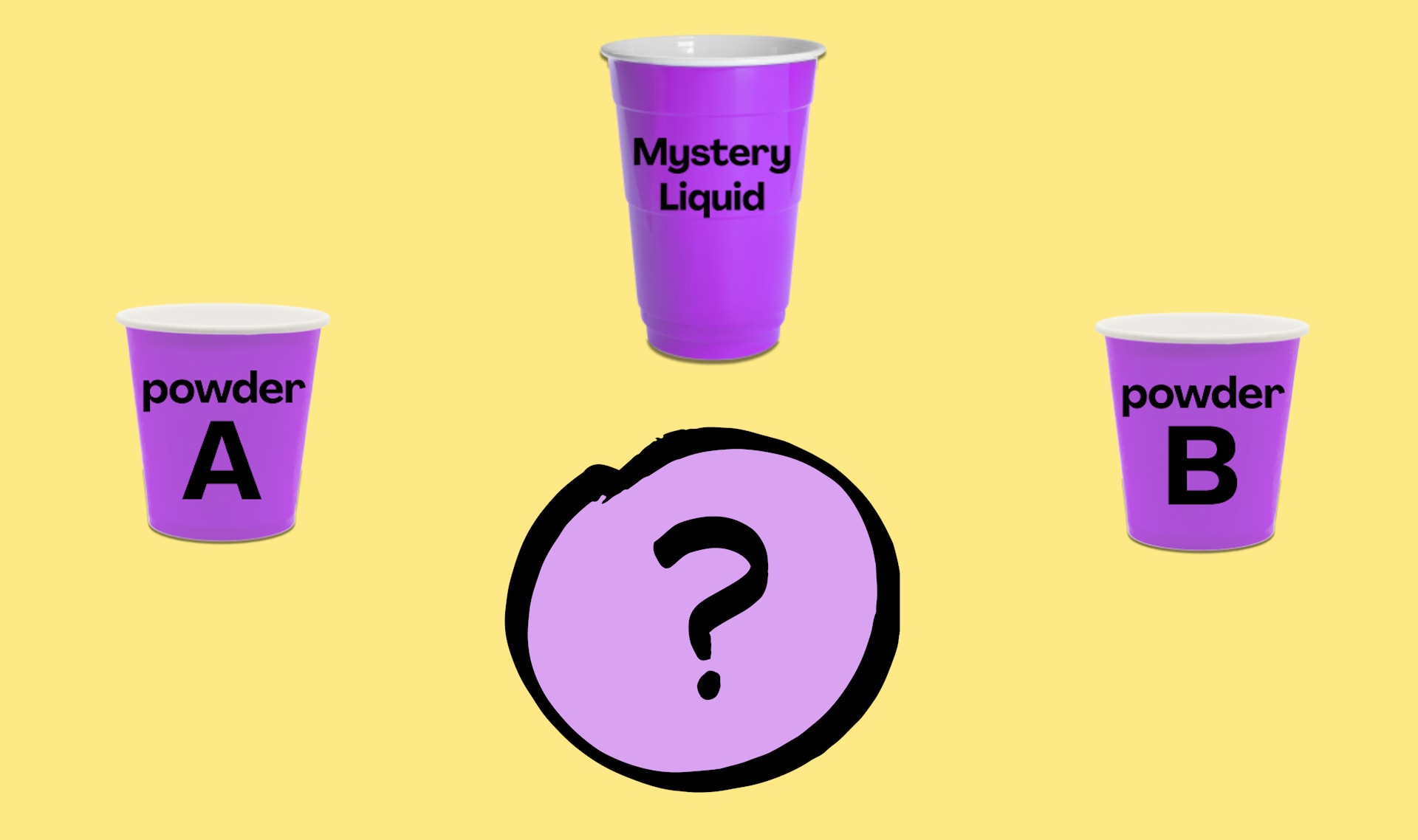
Not every mixture creates an explosion. If you had three mystery substances—
two powders and one clear liquid—how could you figure out which combination
makes an explosion?
Step
01/12
You’ll work with a partner.
Decide who will be Explosion Expert and who will be Boom Boss.
Step
02/12
Discuss.
Step
03/12
Here’s what we said.
Step
04/12
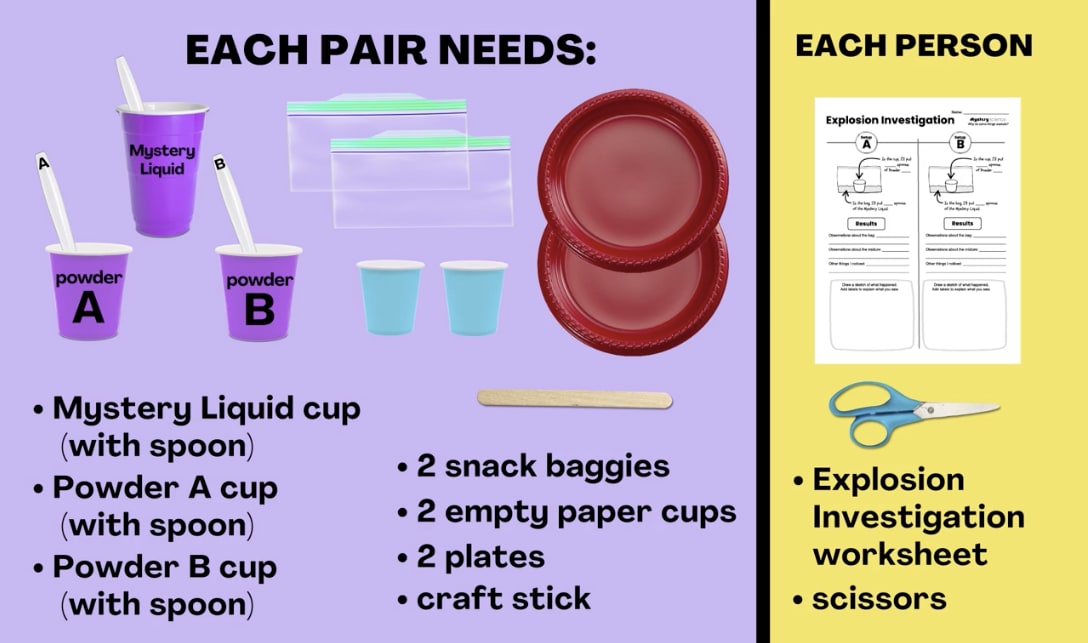
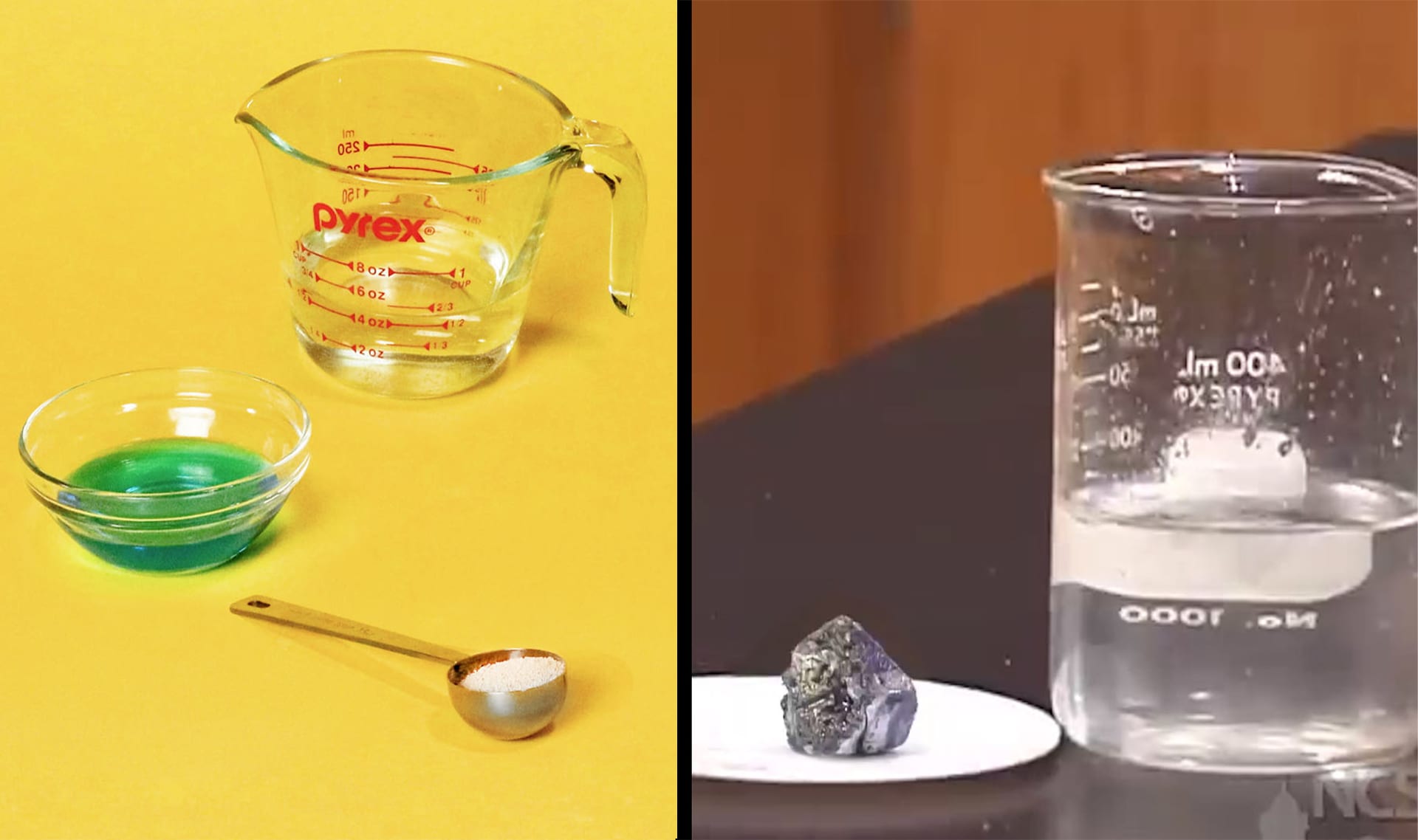
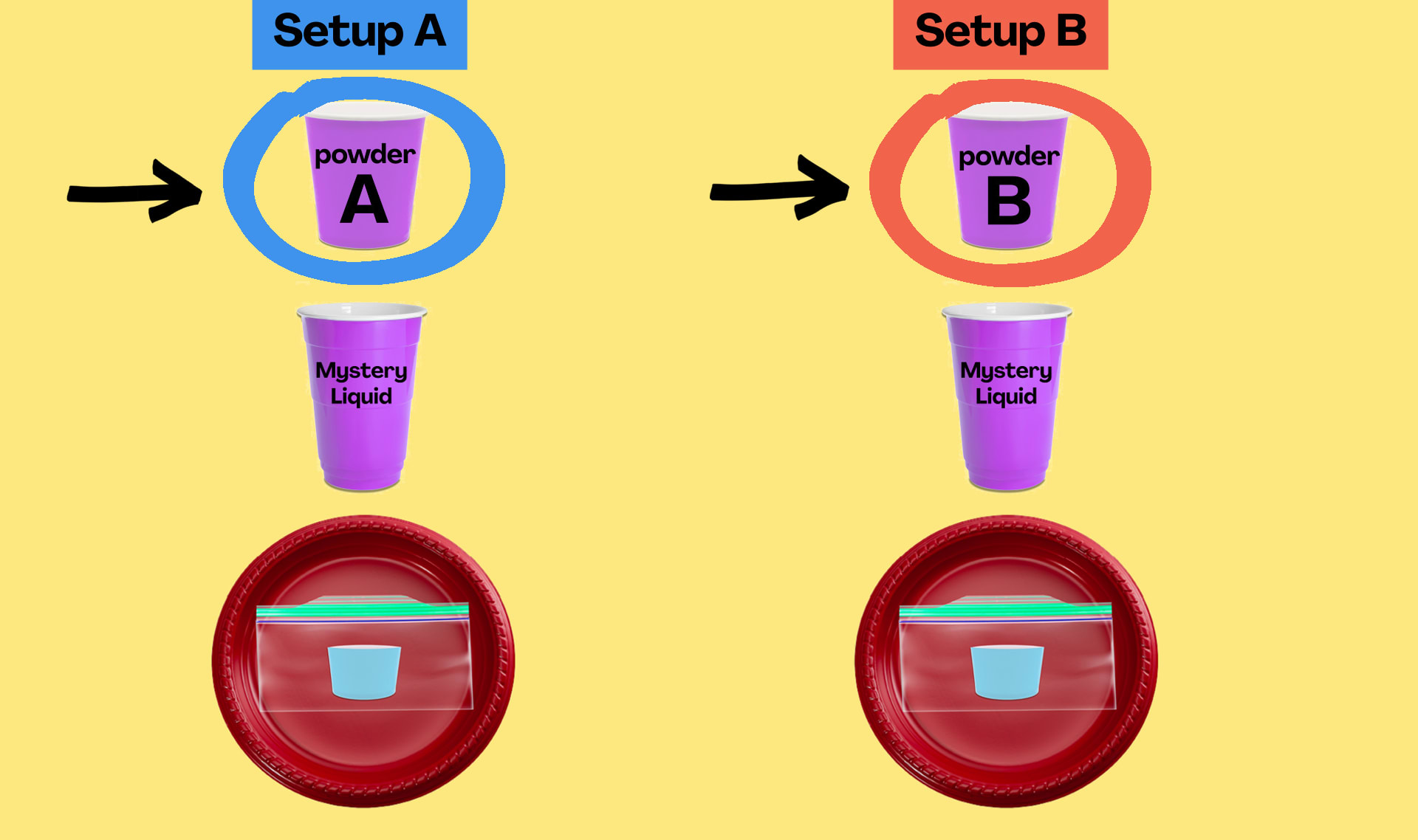
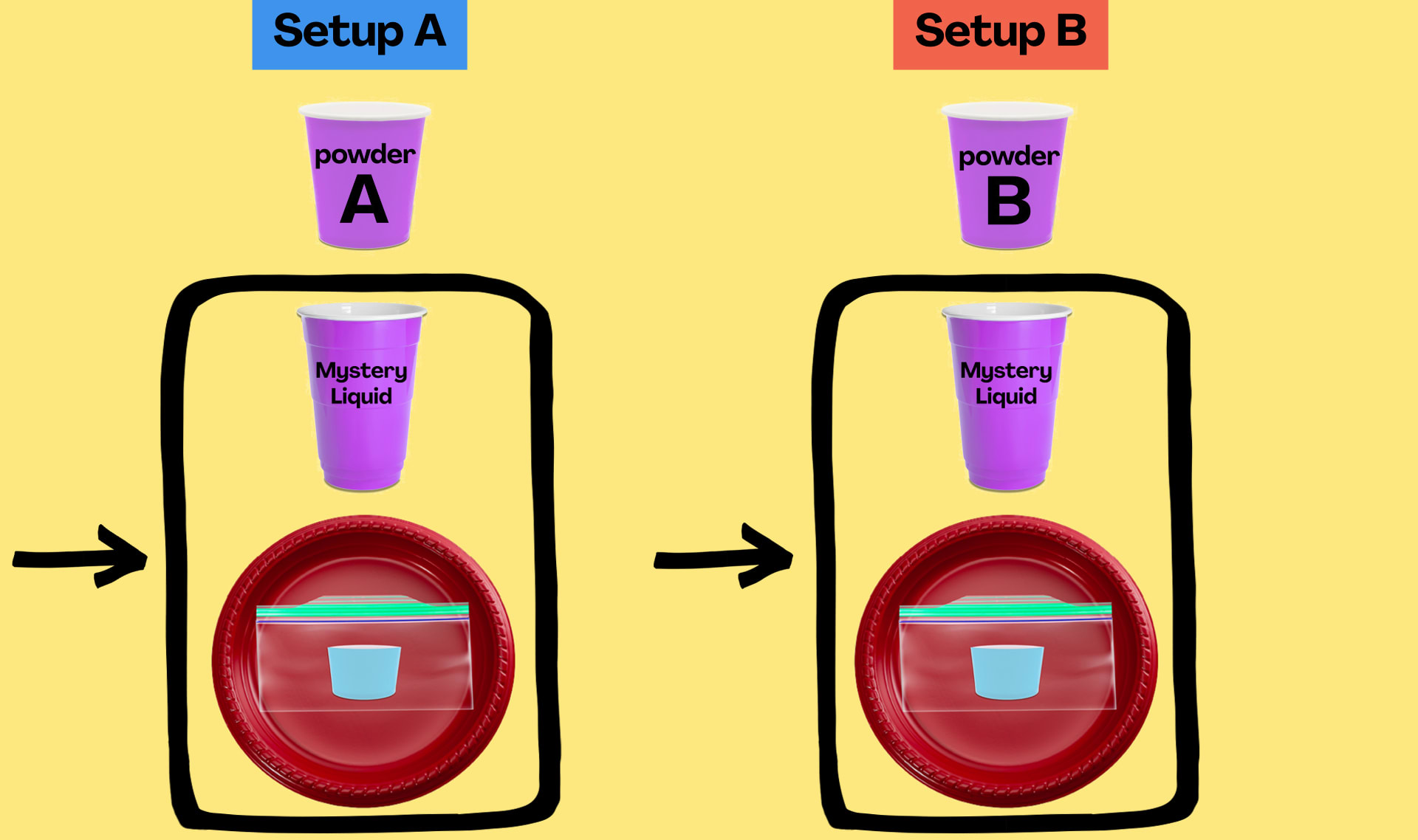
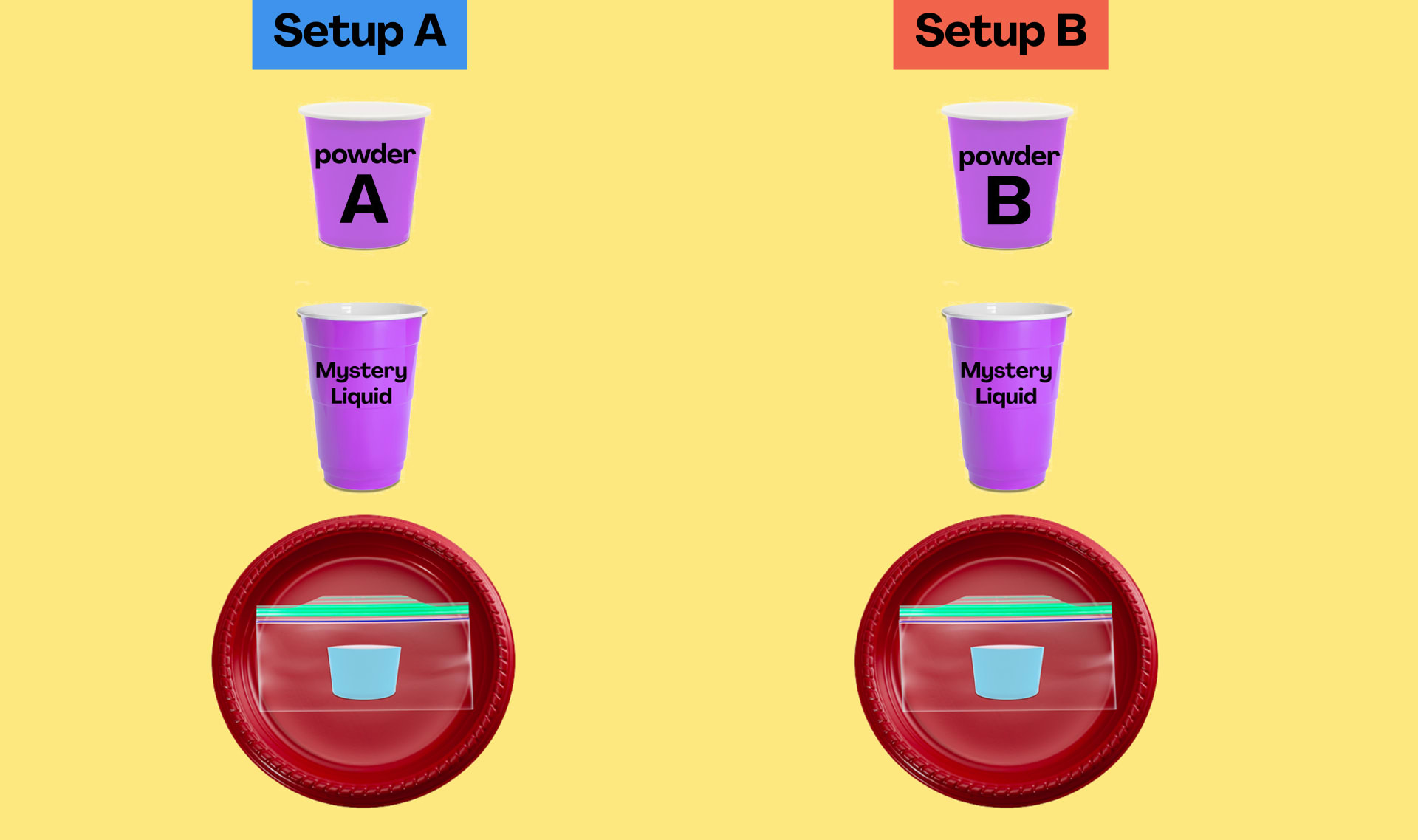
Get your supplies.
Then, set up your testing station like this.
Step
05/12
Fill in the blanks on your worksheet with the numbers that appear on
the screen (or with numbers that your teacher provides).
Step
06/12
Squash an empty cup until it’s flat. Cut across it to make it shorter.
Shape it back into a cup. Do this for both empty cups.
Step
07/12
Explosion Expert: Scoop two spoonfuls of Powder A into your cup.
Boom Boss: Scoop two spoonfuls of Powder B into your cup.
Make sure to level each scoop with a craft stick.
Step
08/12
Boom Boss: Hold your partner’s bag open. Explosion Expert: Add 10
spoonfuls of the Mystery Liquid to the bag. Try to keep the spoonfuls
the same size. Switch jobs and do the same for the other bag.
Step
09/12
Explosion Expert: Carefully place the cup with Powder A into a bag.
Boom Boss: Carefully zip the bag closed.
Then switch jobs and do the same thing for Powder B and its bag.
Step
10/12
When the countdown reaches 0, flip both of your bags over on their
plates so that everything mixes.
Step
11/12
Discuss what you noticed with your partner.
Record your observations for BOTH setups on your worksheet.
Add drawings and words to show what happened in each bag.
Step
12/12
Discuss.
DISCUSS:
What do you notice happening here? Where could the gas be coming from?

DISCUSS:

If chemical reactions can make gases, do you think they can make liquids or solids, too?

Slide Image

matter


1 of 16

anything that takes up space and has weight; can be in different forms such as solid, liquid, or gas
Slide Image

solid


2 of 16

a state of matter that holds its shape

liquid


3 of 16

a state of matter that takes the shape of its container

gas


4 of 16

a state of matter that spreads out to completely fill a space

states of matter


5 of 16

the different forms of matter that include solid, liquid, and gas

mixture


6 of 16

a combination of two or more things

property


7 of 16

something you can observe about an object or material
Slide Image

substance


8 of 16

a material that has specific properties

chemical reaction (chemical change)


9 of 16

a process where two or more substances mix to form a new substance with different properties
Slide Image

explosion


10 of 16

when something bursts outwards

investigation


11 of 16

a process used to figure out the answer to a question or to understand how something works

trials


12 of 16

repeated tests in an experiment
Slide Image

variable


13 of 16

something that you can change in an experiment in order to test an idea
Slide Image

control


14 of 16

something in an experiment that you do not change
Slide Image

fair test


15 of 16

an experiment where everything is kept exactly the same in each setup, except for one thing
Slide Image

evidence


16 of 16

information that can be used to support or reject an idea
🎉 That’s it for this lesson! How did it go?

Extend this lesson

Share this lesson

Sign up now for more great lessons!
Why do some things explode?
Chemical Magic Unit
Lesson 4 of 5
Chemical Reactions & Fair Tests
3.9 (9 reviews)
Lesson narration:

Activity Prep

Print Prep

Standards

Jump to

Exploration

10 mins

Wrap-Up

15 mins

Slow internet or video problems?
 
Chemistry Lesson 4: Why do some things explode?

How did the lesson go?
Terrible OK Good Great Terrific!

How can we improve it?

If you'd like our team to reply to you, please Contact Support instead.

Thanks for your feedback! If you have a question or need help, please contact us. Please consider sharing your review:

Sorry the lesson didn't go well. We read every single review in an effort to improve our Mysteries.

Thanks for letting us know. We’ll wait to ask you for feedback until after you've actually taught it.

Thanks for the feedback! We read every single review in an effort to improve our Mysteries.

Is the video not playing properly?

Please follow these steps:

  1. Very rarely a video will fail to completely load in your browser. Try to reload this page to see if that fixes the problem.
  2. If reloading does not help, try our other video player .
  3. If the video still fails to play, open this video in a new tab and please let us know you’re having trouble. We want to fix this issue for you.

This episode is locked

This lesson is not included in your limited access.

View pricing

This content is available with a Mystery Writing membership

To unlock all lessons, your school or district needs a membership.

This episode is locked

Your membership is expired. The archive of past Mini Lessons is not included in your limited access.

View pricing

Share with colleagues

Thanks for sharing!